

Computer heat sinks are essential components in maintaining the performance and longevity of computer cooling systems. They play a critical role in managing heat generated by electronic components, ensuring that devices operate efficiently and reliably. But what are computer heat sinks made of, and how do different materials impact their performance? In this guide, we’ll explore the common materials used in heat sinks, modern innovations, and how to choose the right heat sink for your needs.
Common Materials Used in Computer Heat Sinks
The materials used in computer heat sinks determine their thermal conductivity, durability, and cost-effectiveness. Here are the most common materials:
Aluminum
- Thermal Conductivity: Good
- Cost: Low
- Weight: Light
- Applications: Ideal for general-purpose cooling in consumer electronics and PCs.
Copper
- Thermal Conductivity: Excellent
- Cost: High
- Weight: Heavy
- Applications: Best for high-performance systems where superior heat dissipation is required.
Composite Materials
- Thermal Conductivity: Moderate to High
- Cost: Varies
- Weight: Light to Moderate
- Applications: Used in specialized applications where a balance between cost and performance is needed.
The Manufacturing Process of Heat Sinks
The process starts with picking materials like aluminum or copper. These are then cut to exact sizes. Techniques like milling and grinding are used to shape the heat sink.
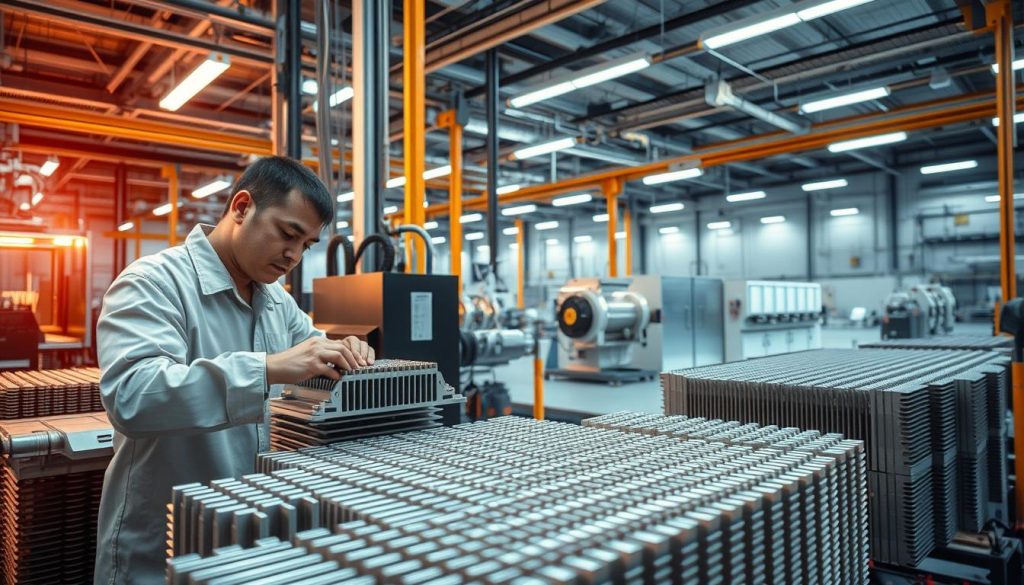
- Extrusion: heated metal is pushed through a die to form a shape
- Stamping: metal is cut and shaped using a die
- Casting: molten metal is poured into a mold to create a shape
These methods can be used alone or together. This allows for complex shapes and large surface areas.
Thermal interface materials are very important. They fill gaps between the heat sink and the component. This ensures efficient heat transfer. Knowing the manufacturing process and the role of thermal interface materials helps make high-quality heat sinks.
What Are Computer Heat Sinks Made of Today: Modern Innovations
As technology advances, so do the materials and designs used in heat sinks.
Vapor Chamber Technology
- How It Works: Uses a sealed chamber filled with a liquid that evaporates and condenses to transfer heat.
- Benefits: Excellent heat distribution and efficiency.
- Applications: High-performance computing and gaming systems.
Phase Change Materials (PCMs)
- How It Works: Absorbs and releases heat during phase transitions (solid to liquid and vice versa).
- Benefits: Provides consistent cooling under varying thermal loads.
- Applications: Ideal for systems with fluctuating heat generation.
Liquid Metal Applications
- How It Works: Uses liquid metal alloys with high thermal conductivity.
- Benefits: Superior heat transfer compared to traditional TIMs.
- Applications: High-end CPUs and GPUs.
Heat Sink Design Features and Efficiency
The design of a heat sink significantly impacts its thermal efficiency and cooling performance. Key design features include:
Fin Geometry
- Purpose: Increases surface area for better heat dissipation.
- Types: Straight fins, pin fins, and flared fins.
Base Plate Thickness
- Purpose: Affects the heat sink’s ability to conduct heat from the component.
- Considerations: Thicker bases offer better thermal conductivity but may increase weight.
Thermal Interface Materials (TIMs)
- Purpose: Ensures efficient heat transfer between the component and the heat sink.
- Types: Thermal paste, pads, and adhesives.
Airflow and Ventilation
- Purpose: Enhances convective cooling.
- Considerations: Proper airflow design prevents heat buildup and improves overall system cooling.
Conclusion: Choosing the Right Heat Sink Material for Your Needs
Choosing the right heat sink material is important for your computer or electronics. You need to think about your cooling requirements. This includes the heat load, the environment, and any future upgrades.
Aluminum is a good choice because it’s affordable and has decent heat conductivity. It works well for most uses. Copper, though, is better at cooling but costs more. For really tough cooling needs, materials like vapor chambers and phase change materials can help a lot.
The best heat sink material for you depends on performance, cost, and how well it fits your needs. By looking at all these factors, you can pick the best one. This will help your electronic parts stay cool and work well for a long time.
FAQ
What materials are commonly used in computer heat sinks?
Common materials include aluminum, copper, and composite materials, each offering different levels of thermal conductivity, durability, and cost.
What are some modern innovations in heat sink technology?
Modern innovations include vapor chamber technology, phase change materials, and liquid metal applications, which enhance cooling efficiency and performance.
How do I choose the right heat sink material for my needs?
Consider factors like heat load, environmental conditions, budget, and future upgrades to select the best heat sink material for your application.


