

LED lighting has become more efficient over time. Yet, the importance of the led heat sink is often missed. It’s key to keeping LEDs cool and bright. Without it, LEDs can overheat, shortening their life.
Heat dissipation is vital in led cooling systems. A good led heat sink can prevent damage to LEDs. This ensures they work at their best. In this guide, we’ll explore the role of LED heat sinks, their design, and how they contribute to effective cooling systems.
What Is an LED Heat Sink and Its Basic Function
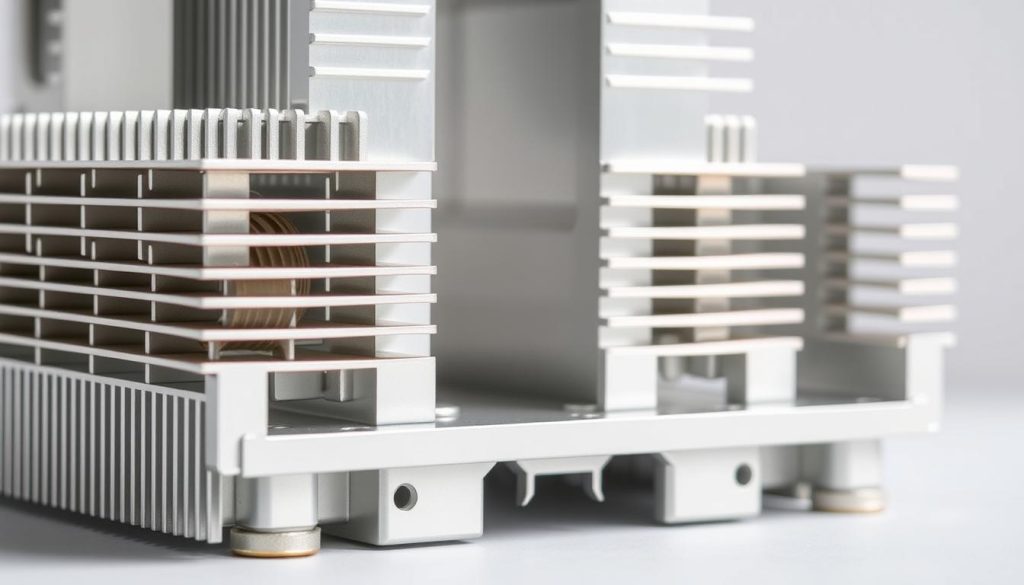
An LED heat sink is key in LED lighting systems. It absorbs and spreads out heat from LEDs. This keeps LEDs cool and working well. Heat sinks typically consist of a base, fins, and thermal material.
The heat sink works by three main ways:
- Conduction: Conduction is direct heat transfer from LED to sink.
- Convection: Convection uses air to move heat.
- Radiation: Radiation sends heat as electromagnetic waves.
This mix helps the heat sink spread out heat. This keeps LEDs running long and well.
The Science Behind LED Heat Dissipation
LEDs, like other electronic devices, produce heat when they work. Thermal management is key in this process, helping to move heat away from the LEDs. Good led heat dissipation stops overheating, which can harm LED performance and lifespan.
Factors Affecting Heat Dissipation
Several factors influence the efficiency of LED heat dissipation:
- Heat Sink Material: Materials like aluminum and copper have high thermal conductivity.
- Design: Fins and surface area play a significant role in heat dispersion.
- Ambient Temperature: Higher ambient temperatures can reduce cooling efficiency.
By optimizing these factors, you can ensure your LEDs remain cool and perform at their best.
Types of LED Heat Sinks and Their Applications
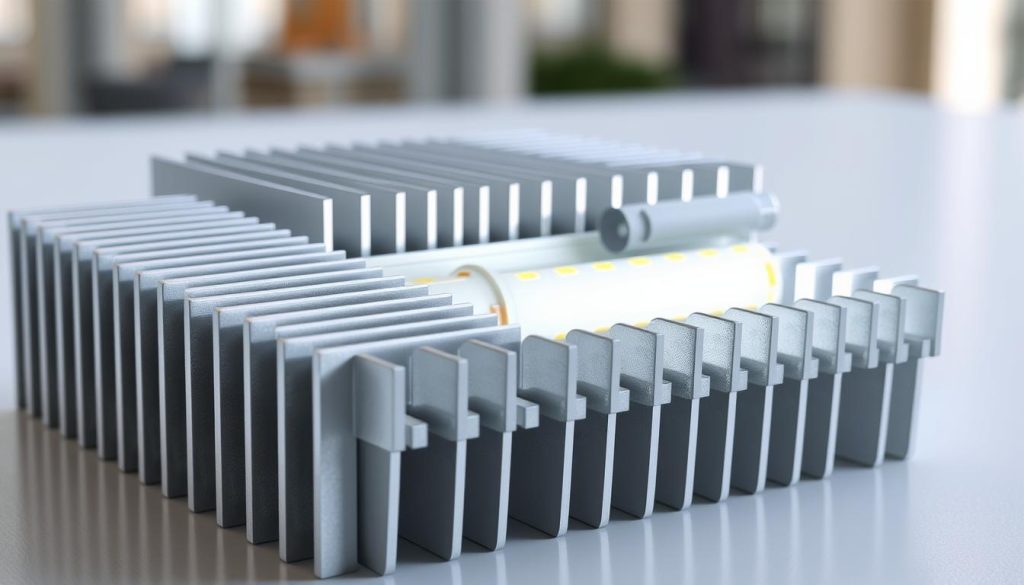
There are various types of LED heat sinks, each suited for specific applications. The choice depends on factors like LED power, operating environment, and desired lifespan.
Passive Heat Sinks
- How They Work: Rely on natural airflow to dissipate heat.
- Advantages: Cost-effective and low maintenance.
- Applications: Ideal for low- to medium-power LEDs in residential and commercial lighting.
Active Heat Sinks
- How They Work: Use fans or other mechanisms to enhance cooling.
- Advantages: More efficient for high-power LEDs.
- Applications: Suitable for industrial lighting, high-bay lighting, and street lighting.
The material of the heat sink is also important. Materials like aluminum, copper, and graphite have different cooling abilities and durability. The choice depends on what’s needed for the job, balancing performance, cost, and reliability.
- High-bay lighting
- Street lighting
- Industrial lighting
- Residential lighting
In short, picking the right heat sink is all about the job’s needs. By choosing wisely, designers and engineers can make sure LEDs perform well, last long, and work reliably.
Benefits of Proper Heat Sink Implementation
Proper heat sink implementation is key for LED systems to work well. It helps increase LED longevity, saving money over time. It also makes LEDs brighter and more reliable.
Some benefits of using heat sinks right include:
- Increased LED longevity
- Improved brightness and reliability
- Reduced maintenance costs
Conclusion: Maximizing LED Performance Through Effective Heat Management
Managing heat is key to getting the most out of LED lights. LED heat sinks help get rid of the heat these lights make. This keeps them bright and working well for a long time.
Using the right LED cooling systems lets designers and engineers get the best from LED tech. Good heat management means LEDs last longer and stay bright. This makes LED lights a smart choice for many uses.
As LED tech gets better, so will the need for good heat management. New heat sink designs and cooling methods will be more important. Lighting experts who keep up with these changes will make sure their LED systems work their best.
FAQ
What is an LED heat sink?
An LED heat sink is a device that helps cool LEDs. It keeps the LEDs working well and lasting longer by removing excess heat.
What are the basic components of an LED heat sink?
An LED heat sink has a base, fins, and a thermal interface material. The base holds the LED. The fins help spread out the heat. The thermal interface material connects the LED to the heat sink.
How does an LED heat sink work?
LED heat sinks use conduction, convection, and radiation to cool LEDs. Heat moves from the LED to the base, then through the fins. It’s released into the air.
How do the material choices for LED heat sinks impact performance?
Material choice affects an LED heat sink’s performance. Aluminum is affordable, copper is better at cooling, and graphite balances cooling and electrical needs.


