

Heat sink audio interference is a big worry for music lovers and pros. Keeping audio equipment cool is key for the best sound. Heat sinks help keep devices at the right temperature, but do they mess with our music?
We’ll look into how heat sinks and audio gear work together. We’ll see why keeping devices cool is important and how it affects sound. Knowing about heat sink audio interference and managing heat in audio gear is vital for a great listening experience.
Understanding Heat Sinks in Audio Equipment
Heat sinks are key in keeping audio devices cool. They help prevent overheating and damage. This is vital for sound quality and avoiding distortion.
There are many heat sink types, each with its own benefits. They are used in amplifiers, preamplifiers, and digital signal processors. Knowing about these can help you choose the best for your setup.
When picking heat sinks, consider material selection, size and shape, and mounting options. This ensures you get the right one for your needs. Whether you’re an engineer or an audiophile, knowing about heat sinks is key for great sound.
Here are some common heat sink types for audio equipment:
Choosing the right heat sink and installing it correctly helps manage heat. This keeps your audio equipment performing at its best.
The Science Behind Heat Sink Operation
Heat sink operation works by moving heat to the air around it. This is called convection. It’s important in audio equipment to keep sound clear and prevent overheating.
Designers use proper thermal management to avoid overheating. Overheating can cause distortion, noise, and damage to parts. Knowing how heat sinks work helps designers make better equipment.
Several things affect how well a heat sink works in audio equipment. These include:
- Material selection: The right material, like copper or aluminum, is important. These materials conduct heat well.
- Surface area: A bigger surface area helps move heat more efficiently.
- Airflow: Good airflow is needed for heat to move away from the heat sink. Designers must make sure there’s enough air around it.
By using thermal management and understanding heat sink operation, designers can make equipment that sounds great. It also runs well and lasts longer.
Do Heat Sinks Interfere with Audio Performance?
Common issues
- electromagnetic interference
Heat sinks are used to prevent overheating in audio equipment. They can sometimes cause electromagnetic interference. This interference can lead to distorted audio signals.
- Vibration effects
Vibration effects from heat sinks can also affect sound quality. They can cause unwanted resonance or buzzing noises.
Reducing interference from heat sinks
- Using shielding materials like copper or aluminum can block electromagnetic fields.
- vibration-dampening materials like rubber or silicone can reduce vibration effects.
By implementing these strategies, manufacturers can minimize the impact of heat sinks. This ensures high-quality sound for listeners.
Common Heat Sink-Related Audio Issues
Heat sinks are key in audio gear, helping to keep things cool and working right. But, if they don’t work well, it can cause problems. These issues might come from bad design, wrong setup, or not keeping them up, leading to poor sound quality.
Some common issues:
- Distortion and noise from too much heat
- Interference and hum from bad design
- Damage from not enough cooling
Understanding these issues and using good thermal management can solve them. Regular care, correct setup, and quality heat sinks help avoid these problems. This keeps your audio equipment working its best.
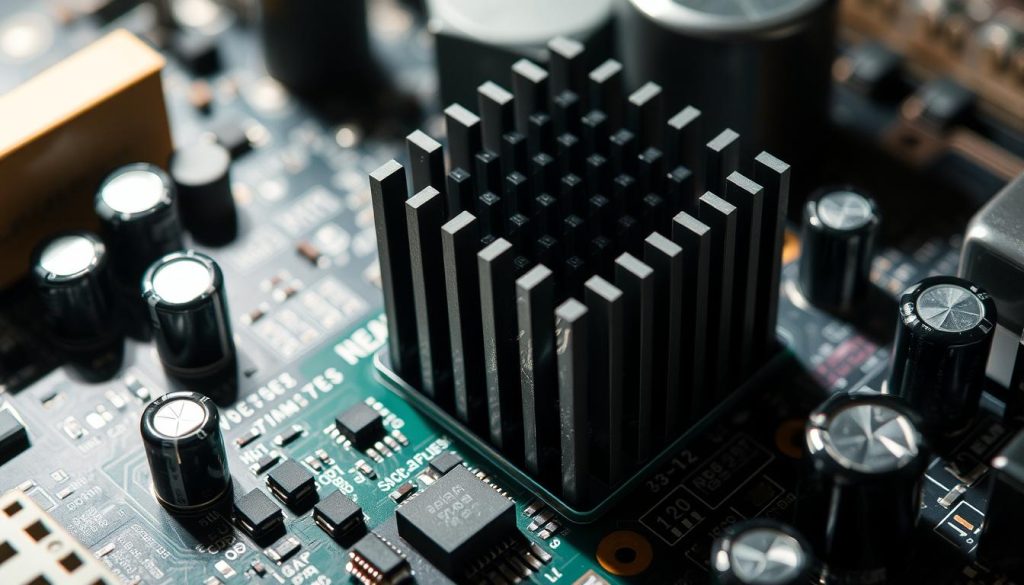
Best Practices for Heat Sink Installation
A well-installed heat sink boosts performance and extends device life. It’s important to think about positioning, isolation, and material choice.
- Positioning — Position the heat sink for maximum airflow and heat dissipation.
- Isolation — Use thermal pads or gap fillers to lower thermal resistance.
- Material choice — Pick materials that fit the device’s temperature range.
Installing a heat sink requires careful planning and execution. Choose the right materials, like copper or aluminum. Make sure the heat sink is firmly attached to the device. Heat sink installation should also consider airflow and thermal dynamics for best results.
By following these steps and considering the device’s needs, you can ensure your heat sinks work well. This leads to better audio equipment design and performance.
Optimizing Your Audio Setup with Heat Sinks
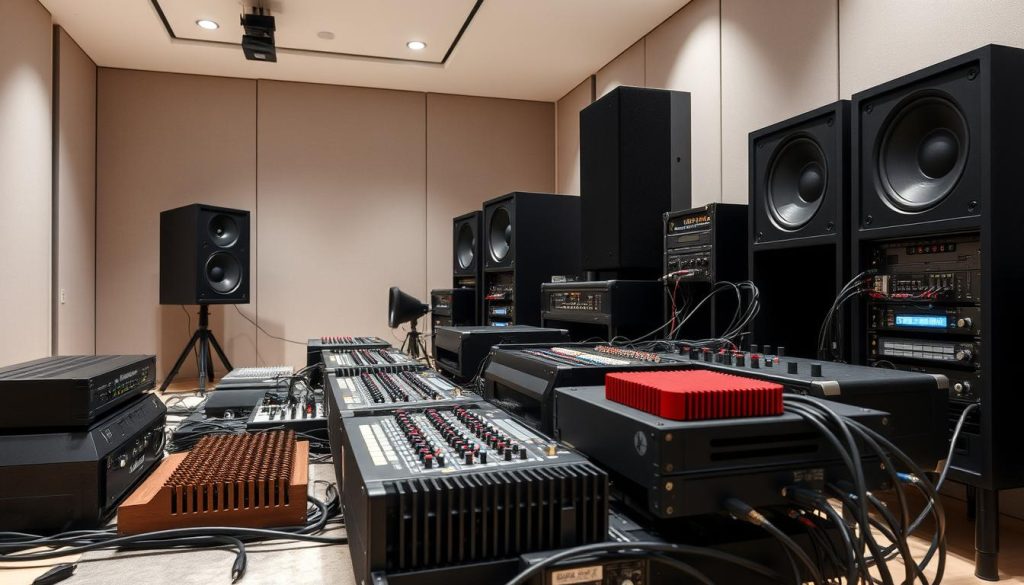
Effective thermal management techniques help avoid overheating. This keeps your audio components safe and sound. Key steps include:
- Choosing the right size and type of heat sinks for your components
- Making sure there’s good airflow around the heat sinks
- Using materials that help heat transfer better
These steps can greatly improve your audio setup’s sound quality. Always keep thermal management techniques in mind when setting up or upgrading your audio system. It’s vital for performance and longevity.
| Optimization Technique | Benefits |
|---|---|
| Proper heat sink sizing | Reduced overheating risk, improved audio quality |
| Adequate airflow and ventilation | Enhanced heat transfer, increased component lifespan |
| Thermal interface materials | Improved heat transfer, reduced thermal resistance |
Conclusion: Balancing Thermal Management and Audio Quality
Installing heat sinks correctly and using the right materials can help avoid sound quality issues. Keeping up with new thermal management tech can also boost your audio gear’s performance.
By focusing on both thermal management and sound quality, you can enjoy your music or audio with unmatched clarity. This article has given you the tools to handle heat sinks effectively. Now, you can set up your audio system to truly impress your senses.
FAQ
How do heat sinks affect audio performance?
Heat sinks can mess with audio quality. They can cause electromagnetic interference, vibration, and resonance. These issues can lead to noise, distortion, and unclear sound.
What are the common heat sink-related audio issues?
Common audio problems caused by heat sinks include electromagnetic interference and vibration. These can result in poor sound quality, noise, and distortion.
What are the best practices for optimizing my audio setup with heat sinks?
To improve your audio setup with heat sinks, focus on reducing interference and vibration. Use proper positioning, isolation, and choose the right materials.


