

Choosing the right heat sink is key for good cooling systems. It’s not easy with so many options out there. Good thermal management stops overheating and keeps devices running well. This guide will walk you through the key factors to consider when selecting a heat sink, helping you achieve better thermal management and system performance.
Understanding Heat Sink Basics
Heat sinks are essential for managing heat and maintaining the optimal temperature of electronic devices. They work by dissipating heat away from components, ensuring reliable operation. To choose the right heat sink, it’s important to understand the basics, including types, thermal resistance, and materials.
Types of Heat Sinks
There are many types of heat sinks, each for different needs. Here are a few:
- Plate heat sinks: Simple and affordable, good for low-power devices
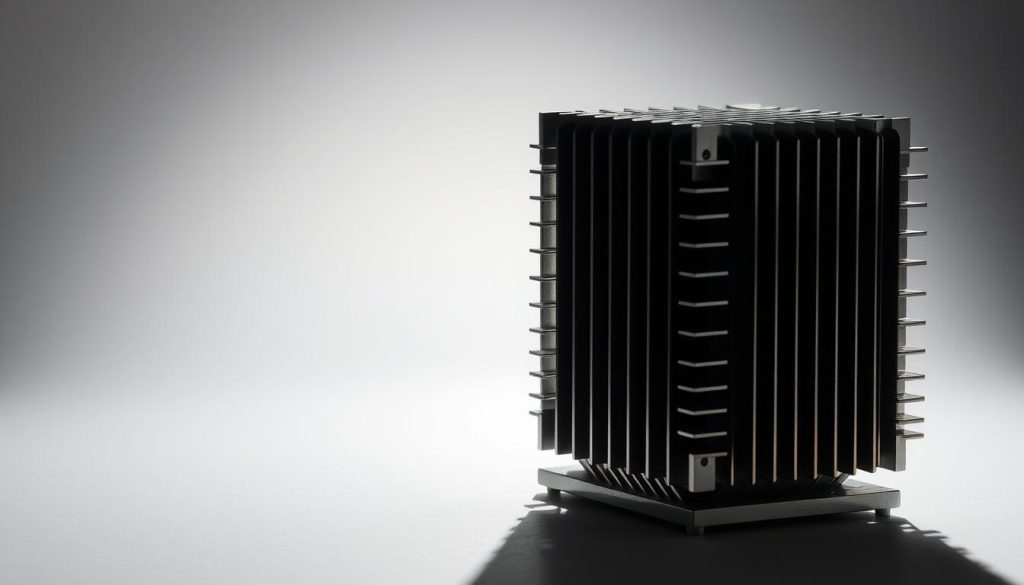
- Fin heat sinks: Have long surfaces to spread out heat, best for high-power devices
- Pin fin heat sinks: Mix the best of both worlds, great for more heat transfer
Thermal Resistance and Materials
Thermal resistance measures how effectively a heat sink can transfer heat. Materials like aluminum and copper are commonly used due to their excellent thermal conductivity. Aluminum is lightweight and affordable, while copper offers superior heat conduction but is heavier and more expensive.
Key Factors in Heat Sink Performance
Several factors influence the performance of a heat sink. Understanding these elements is essential for optimizing cooling systems.
Thermal Conductivity
The thermal conductivity of a heat sink is critical. Materials like copper or aluminum are used for this reason.
Surface Area
The surface area also matters, as more area means better heat dissipation.
Airflow
Airflow is another important factor for cooling systems. Good airflow is needed to move heat away from the sink. Poor airflow can lower heat sink performance.
Here are some tips for better airflow:
- Make sure there’s enough space around the heat sink.
- Use fans or other cooling devices to improve airflow.
- Design the heat sink to maximize surface area and airflow.
How to Select a Heat Sink for Your Application
Selecting the right heat sink involves evaluating your system’s specific needs. Consider the following factors:
- Thermal resistance requirements: Find out the max thermal resistance your application needs. A lower thermal resistance indicates better heat dissipation.
- Space and size constraints: Make sure the heat sink fits and can be integrated into your system.
- Airflow considerations: Think about how airflow affects the heat sink’s performance.
- Budget limitations: Find a balance between cost and performance to get the best value.
By looking at these factors and your application’s needs, you can choose the best heat sink. It should offer great performance, fit well, and be affordable.
Material Considerations and Properties
Choosing the right heat sink material is key to its performance. The material you choose depends on your specific needs and how much heat you need to dissipate.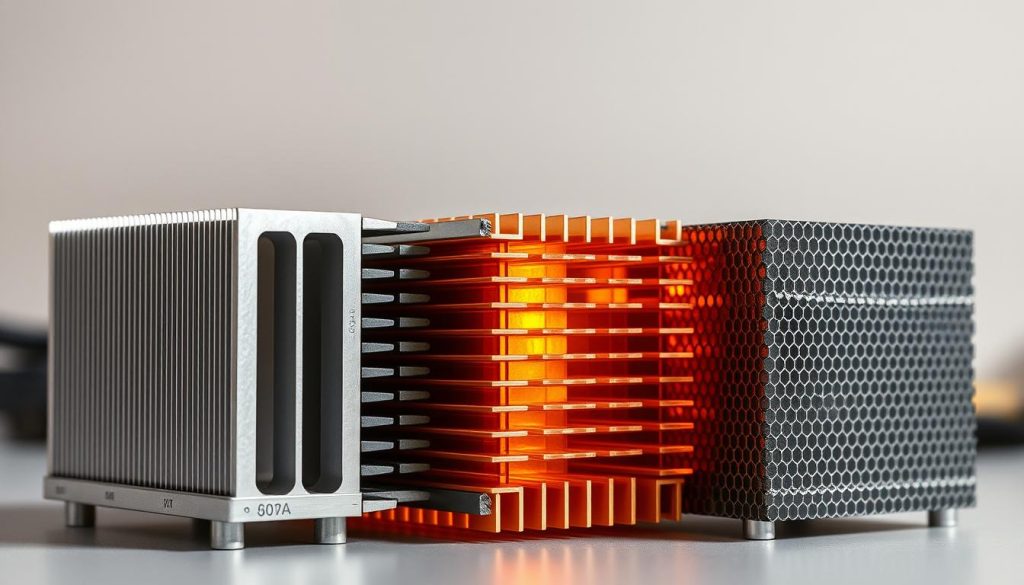
Aluminum vs Copper Heat Sinks
Aluminum and copper are common choices for heat sinks. Aluminum is cheaper and conducts heat fairly well. Copper, on the other hand, conducts heat better but costs more. Your choice should match your application’s needs.
Surface Finishes and Treatments
Heat sinks can have different surface finishes and treatments to improve their performance. Options include anodizing, chromating, and nickel plating. Each has its own benefits and drawbacks, depending on your application and environment.
Thermal Conductivity Comparisons
Comparing the thermal conductivity of different heat sink materials is vital. This measure shows how well a material can conduct heat. It’s a key factor in how well a heat sink works.
Mounting Methods and Installation Requirements
Proper installation is critical for heat sink performance. Common mounting methods include:
- Clips: Easy to install and remove, suitable for lightweight heat sinks.
- Screws: Provide a secure and stable connection, ideal for heavier heat sinks.
- Adhesive: Offers a permanent solution but may limit future maintenance.
Ensure the heat sink is in good contact with the heat source and that there’s adequate airflow for heat dissipation.
Heat Sink Design Features
Designing a heat sink involves many factors for the best performance. A good heat sink can greatly improve a system’s cooling.
- Pin fin vs straight fin designs: Pin fin designs can provide better heat transfer, but may be more complex to manufacture.
- Base thickness considerations: A thicker base can provide better thermal conductivity, but may increase the overall size of the heat sink.
- Surface area optimization: Maximizing the surface area of the heat sink can increase heat transfer and improve cooling efficiency.
By focusing on these aspects and using designs like pin fins, heat sinks can be made to cool efficiently. They are essential in many applications.
Common Heat Sink Selection Mistakes to Avoid
Ignoring Thermal Interface Materials
These materials are vital for connecting the heat sink to the device, ensuring efficient heat transfer. Without them, the heat sink might not work as well, leading to performance issues.
Overlooking Environmental Factors
Things like temperature, humidity, and airflow can change how well a heat sink works. For instance, a heat sink made for cooler places might not handle warmer temperatures well.
Mismatching Heat Sink to Heat Load
Ensure the heat sink can handle the heat load of your application. An undersized heat sink will struggle to dissipate heat effectively.
Conclusion: Making the Right Heat Sink Choice
Selecting the right heat sink is vital for maintaining optimal system performance and preventing overheating. By considering factors like thermal resistance, material properties, and design features, you can choose a heat sink that meets your specific needs.


