
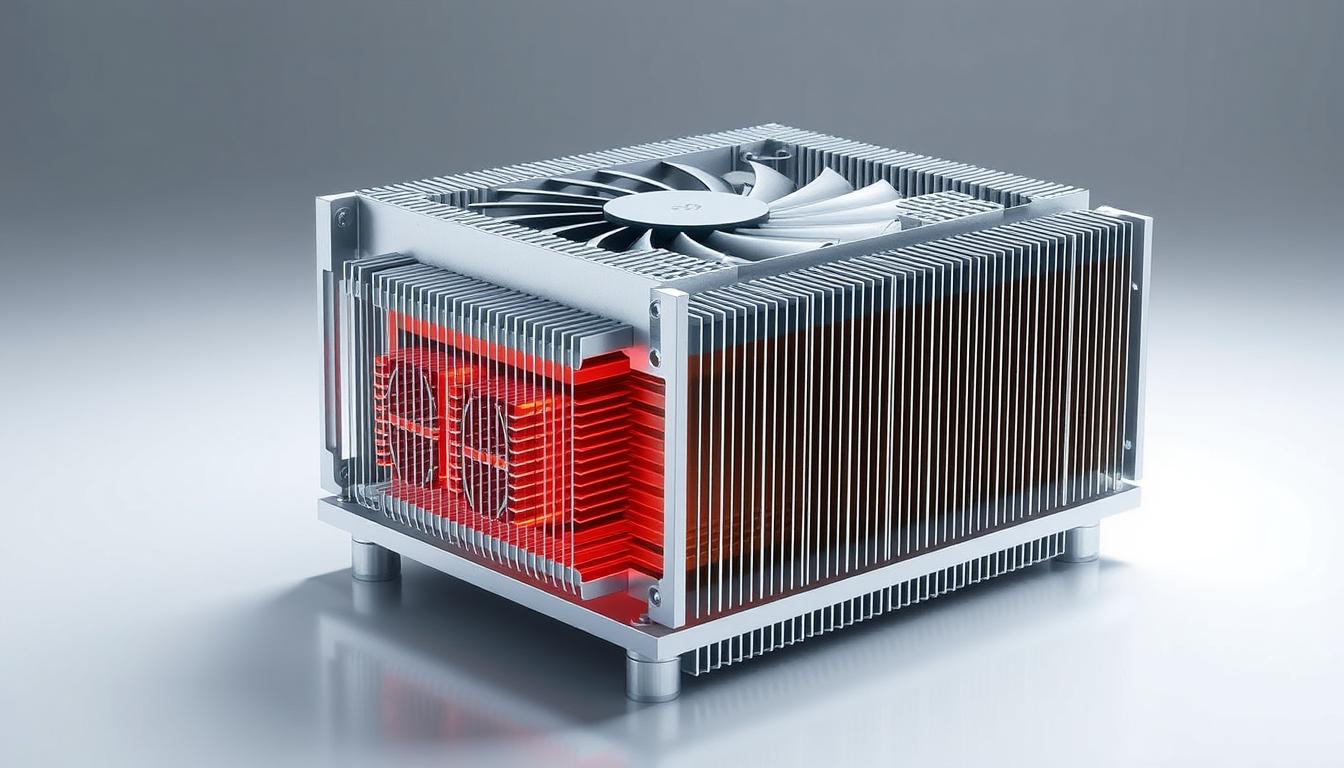
Heat sinks are key to keeping our electronic devices cool, they help cool down the heat from electronic parts and are used in many cooling solutions. Knowing how they work is vital. In this article, we’ll dive into the world of heat sinks and their role in keeping devices running well.
We’ll look at the good and bad of different cooling methods. By learning about heat sinks, we can make better choices for our devices. This article will be your guide to heat sinks and cooling solutions.
Understanding Heat Sink Basics
Heat sinks play a key role in cooling electronic parts. They soak up and spread out heat from things like computer processors. This is done through conduction and convection, making them very effective.
The material of a heat sink is very important. Materials like copper or aluminum are used because they transfer heat well. The right material depends on how much heat needs to be moved and the space available.
- Copper: known for its high thermal conductivity and durability
- Aluminum: a cost-effective option with good thermal conductivity
- Steel: often used in high-performance applications where strength and durability are critical
Do Heat Sinks Have to Have Fans for Effective Cooling?
Many people wonder if heat sinks need fans to cool well. The truth is, it’s not always yes or no. Fans can help cool things down, but they’re not always needed.
Some heat sinks, called fanless heat sinks, cool down without fans. They use passive cooling methods. These are good for places where fan noise or upkeep is a problem. Fanless heat sinks can cool as well as those with fans, even when there’s no airflow.
Using fanless heat sinks has many advantages. They’re more dependable and need less upkeep than fan systems. Also, fanless heat sinks are often smaller and lighter. This makes them perfect for small or portable devices.
Whether to use a fan with a heat sink depends on the situation. Fans are helpful in some cases. But, fanless heat sinks with passive cooling can also be a good choice.
Passive vs Active Heat Sink Cooling
There are two main ways to cool heat sinks: passive and active. Passive cooling uses natural methods like convection or radiation. Active cooling, on the other hand, uses fans or devices to push air through the heat sink.
Choosing between passive and active cooling depends on your needs. Active cooling is best for high-performance systems that need fast heat dissipation. Passive cooling systems work well for low-power devices or where you want to keep it quiet.
- Passive cooling systems are quiet, reliable, and easy to maintain. But, they might not work well in very hot places.
- Active cooling solutions can handle more heat but can be noisy and use more power.
Active cooling usually beats passive cooling in heat dissipation. Yet, passive cooling can be effective in some cases, like when used with other cooling methods. Knowing the pros and cons of each helps you pick the right cooling method for your needs.
Benefits and Drawbacks of Fanless Heat Sinks
Fanless heat sinks are gaining popularity for their silent cooling. They are perfect for places where noise is a problem. This makes them great for homes, offices, and more.
These heat sinks are reliable and need little upkeep. They work well because they don’t have moving parts. But, they cool less efficiently and cost more.
When thinking about fanless heat sinks, consider the pros and cons. Important factors include:
- Cooling performance needs
- Desired noise levels
- Cost and budget
- Space and size
Fanless heat sinks are used in electronics and automotive fields. Researchers are looking to make them better. They’re exploring new materials and designs.
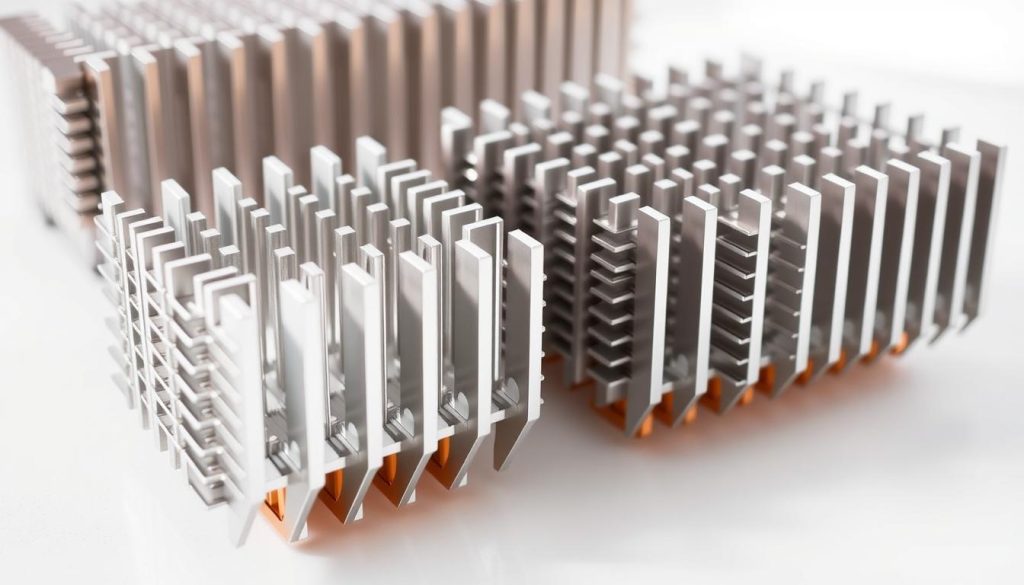
Factors Affecting Heat Sink Performance
Optimizing Heat Sink Performance
- Increasing the surface area of the heat sink
The size and shape of the heat sink are key. A big, well-designed heat sink can move heat away from the source to the air. This makes it vital in many electronic devices.
- Using materials with high thermal conductivity
The material used for the heat sink is also important. Copper or aluminum are good because they move heat well.
- Designing the heat sink to account for environmental conditions
The weather, like temperature and humidity, can also affect how well a heat sink works. Knowing these things helps makers design better heat sinks.
By focusing on these areas, makers can make cooling systems better. This leads to devices that work better and last longer.
Choosing Between Fan and Fanless Heat Sinks
Whether you’re making a gaming PC or an industrial cooling system, picking the right heat sink is critical. It’s all about finding the best cooling solution for your needs.
- Application: The type of device or system you’re building will play a significant role in determining the best heat sink for your needs.
- Budget: Heat sinks can vary significantly in price, so it’s essential to set a budget and choose a heat sink that meets your needs within that budget.
- Space: The available space for the heat sink will also impact your decision, as some heat sinks are more compact than others.
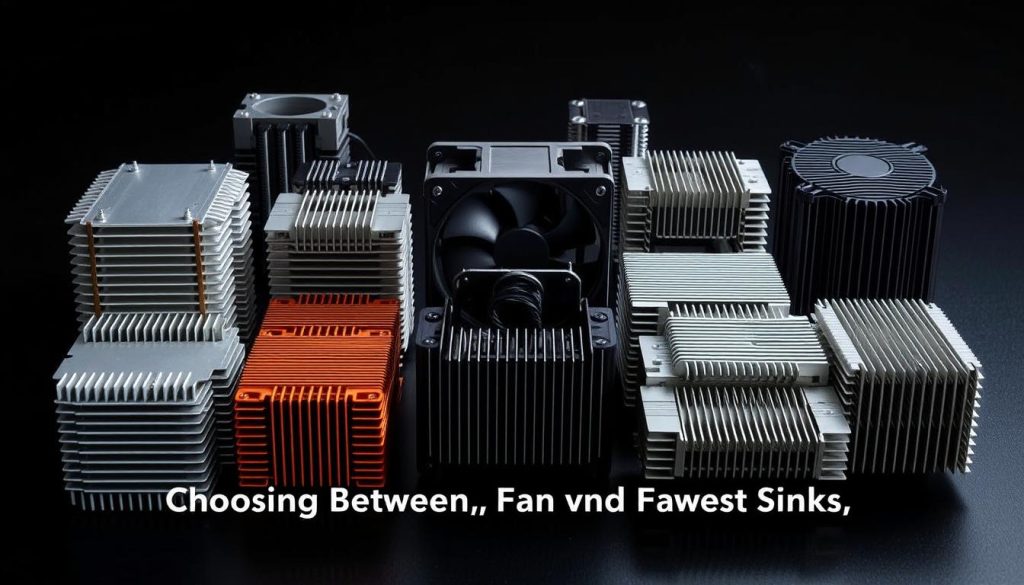
By considering these factors and choosing the right heat sink, you can ensure your device or system runs smoothly. This means effective cooling solutions that meet your needs.
Conclusion: Making the Right Cooling Choice
Heat sinks are vital for keeping electronic parts cool. This helps them work well and last longer. When picking between fanless and fan-based heat sinks, think about what you need. Knowing the pros and cons of cooling systems helps you make a smart choice. It’s about finding a balance between performance, cost, and space. The right cooling can greatly improve your devices’ long-term success.
As you explore heat sinks and cooling tech, remember these tips. With the right strategy, your electronics will stay cool and efficient for years.
FAQ
How long do cooling fans typically last?
Quality fans last 50,000-100,000 hours (5-10 years with 24/7 use).
Are there completely silent active coolers?
A: Near-silent options exist (sub-20dB), but true silence requires passive cooling.
What factors affect heat sink performance?
Several factors impact heat sink performance. These include its design, thermal conductivity, and the environment. Improving these can enhance cooling efficiency.
How do I choose between a fan and fanless heat sink?
Consider the application, budget, and space when choosing. Fan-based heat sinks cool better. But, fanless ones are better for quiet needs.


