

Drones rely on efficient cooling systems to maintain peak performance and prevent damage from overheating. As drone technology advances, managing heat becomes increasingly critical for flight time, battery life, and component longevity. This comprehensive guide explores the different cooling methods used in drones, including heat sinks, active cooling systems, and emerging technologies that are shaping the future of drone thermal management.
Understanding Heat Sinks in Drone Technology
Heat sinks are key for keeping drones at the right temperature. They help prevent damage to important parts. In drones, they keep the battery, motor, and control systems cool.
To grasp how heat sinks work, we need to understand heat transfer basics. They have lots of surface area to move heat away. Materials like copper or aluminum help do this well. This keeps drones flying smoothly, longer, and safe from overheating.
These materials are picked for being good at moving heat, strong, and light. By adding heat sinks, drone makers keep their drones safe in any weather. Keeping drones cool is vital for their performance, reliability, and how long they last.
Why Temperature Control Matters for Drone Performance
Temperature control is key for a drone’s performance. It ensures the drone works at its best. This affects how long the battery life lasts and how well the drone works.
- stop overheating and damage to parts
A good temperature control system stops overheating. Overheating can harm the drone’s parts and shorten its life.
- make the battery life longer and the drone last longer
Keeping the drone at a stable temperature helps the battery life last longer. This means the drone can fly for longer and work more efficiently.
- make the drone work better and more reliably in different places
Also, proper temperature control lets the drone work in different places. This makes the drone more useful and dependable.
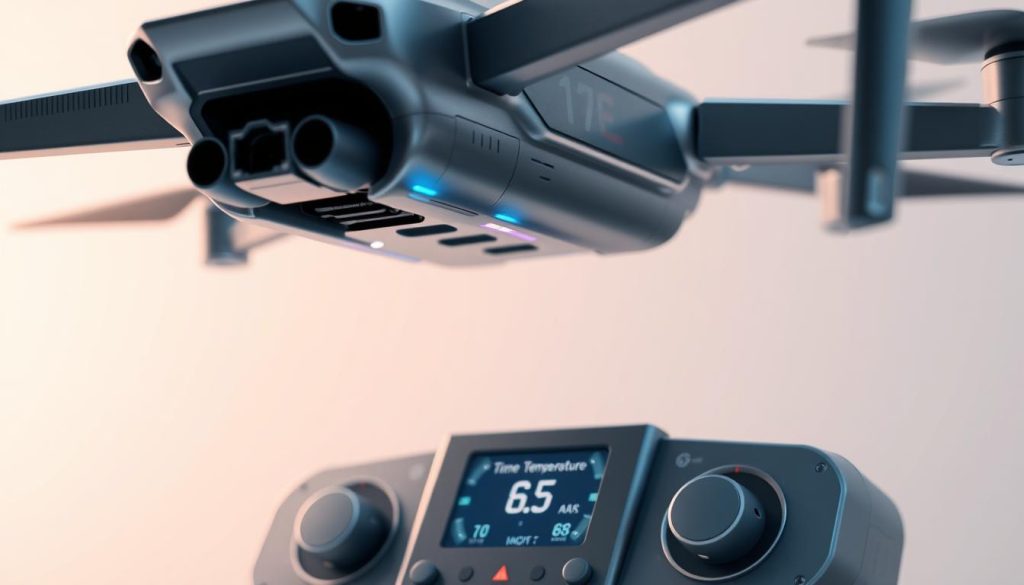
Do Drones Have a Heat Sink: Types and Implementation
Drones use different cooling systems to keep their temperature right. These systems help the drone’s parts work well. The main cooling types are active, passive, and hybrid cooling.
Active cooling — Active cooling uses fans or liquid to cool drones. It’s good for drones that get very hot.
Passive cooling –Passive cooling uses materials like copper to absorb and spread out heat.
Hybrid cooling — Hybrid cooling mixes active and passive cooling. This way, drones can control their temperature better. Hybrid systems are flexible and work well for many drone uses.
Knowing about drone cooling systems helps makers create better drones. They can work well even in tough places.
Impact of Heat Management on Drone Flight Time
Effective heat management is key to better drone flight times and preventing overheating. Drones make heat as they fly, overheating cuts down on flight time, which can hurt their performance. The link between heat control and flight time is complex, touching on battery life and motor performance. With the right cooling systems, drones can fly longer and perform better.
Several factors affect drone flight time, including:
- Temperature effects on battery life: High temperatures shorten battery life, cutting down flight time.
- Motor performance and heat generation: Motors that get too hot can make drones less efficient and shorten flight times.
Knowing how heat management affects flight time helps manufacturers make better drones. This is vital for commercial drones used for tasks like aerial mapping and surveillance.

Alternative Cooling Methods for Drones
The drone world is growing fast, and scientists are looking into new alternative cooling ways. They want to make drone cooling systems better. One idea is using special materials that can spread heat better.
These new cooling methods might help drones fly longer and work better. They could also lower the chance of drones getting too hot. But, making these systems might be harder and could cost more.
Some cool ways to cool drones include:
- Liquid cooling systems, which use a liquid coolant to absorb and dissipate heat
- Air-cooled heat sinks, which use a combination of air flow and heat sinks to cool the drone’s components
- Hybrid cooling systems, which combine different cooling methods to achieve optimal performance
As scientists keep working on these new cooling ideas, drones will get a lot better. Drones will be more reliable and efficient. They’ll be able to do many tasks well.
Conclusion: The Future of Drone Cooling Technology
The need for drones is rising, making cooling tech more vital. Drone makers are looking into new ways to handle heat. They aim to boost performance, extend flight times, and improve efficiency.
Researchers are exploring new materials and designs for cooling. They’re looking at graphene and carbon nanotubes for better heat dissipation. Heat sink designs are also getting a makeover to enhance airflow and heat transfer.
Hybrid cooling systems are gaining attention. They mix active and passive methods for better thermal management. As drone tech advances, expect to see more innovative materials, designs, and control systems. This will help drones perform even better.
FAQ
Do all drones have cooling systems?
Most consumer drones use passive cooling (heat sinks). High-performance drones often have active cooling.
Does cooling improve battery life?
Yes, keeping batteries cool extends lifespan and maintains efficiency.
What types of cooling systems are used in drones?
Drones use different cooling methods. Some have fans or liquid cooling to actively cool them down. Others use heat sinks and designs to cool down naturally. The choice depends on the drone’s size and power needs.
What are some alternative cooling methods being explored for drones?
Scientists are looking into new ways to cool drones. They’re using advanced materials and phase-change cooling. They’re even looking at designs inspired by nature. These ideas aim to make drones cooler, lighter, and more reliable.


