

Heat sinks are key in keeping electronic devices cool. Their design greatly affects how well devices work and last. A good heat sink design helps keep devices at the right temperature.
A well-made heat sink is vital for thermal management. Knowing how to design heat sinks helps make devices more efficient and reliable. This article will dive into the world of heat sinks, their role in keeping devices cool, and why design matters.
Understanding the Basics of Heat Sinks
Heat sinks are key in electronics cooling. They help get rid of heat from electronic devices. This happens through heat transfer, where heat is absorbed and spread out. The success of a heat sink depends on the heat sink materials and its design.
To grasp how heat sinks work, knowing their parts is important. These parts are the base, fins, and mounting system. The base, often made of copper or aluminum, absorbs and spreads heat. The fins increase the heat sink’s surface area, making heat transfer to air more efficient.
- Material selection: Choosing the right heat sink materials is critical for effective electronics cooling.
- Design and configuration: The design of the heat sink, including the shape and size of the fins, can significantly impact its performance.
- Mounting and installation: Proper mounting and installation of the heat sink are essential to ensure optimal heat transfer and prevent damage to the device.
Understanding heat sinks and their role in electronics cooling is vital. It shows how important they are for keeping electronic devices working well. Using top-notch heat sink materials and well-designed heat sinks prevents overheating. This ensures devices run reliably.
The Science Behind Heat Transfer
Heat transfer is key in thermal management systems. It helps move heat away from electronic devices efficiently. There are three main ways to transfer heat: conduction, convection, and radiation. Conduction happens when objects touch and heat moves between them. Convection is when fluids move and take heat with them. Radiation is when heat travels as electromagnetic waves.
In heat sinks, heat transfer is very important. It helps electronic devices work their best. By knowing how heat transfer works, engineers can make better thermal systems. These systems are vital for keeping devices cool and working well.
Several things affect heat transfer in these systems:
- Material properties, like how well they conduct heat
- The shape and size of the heat sink
- How fast fluids move and their temperature
- The temperature and pressure around the system
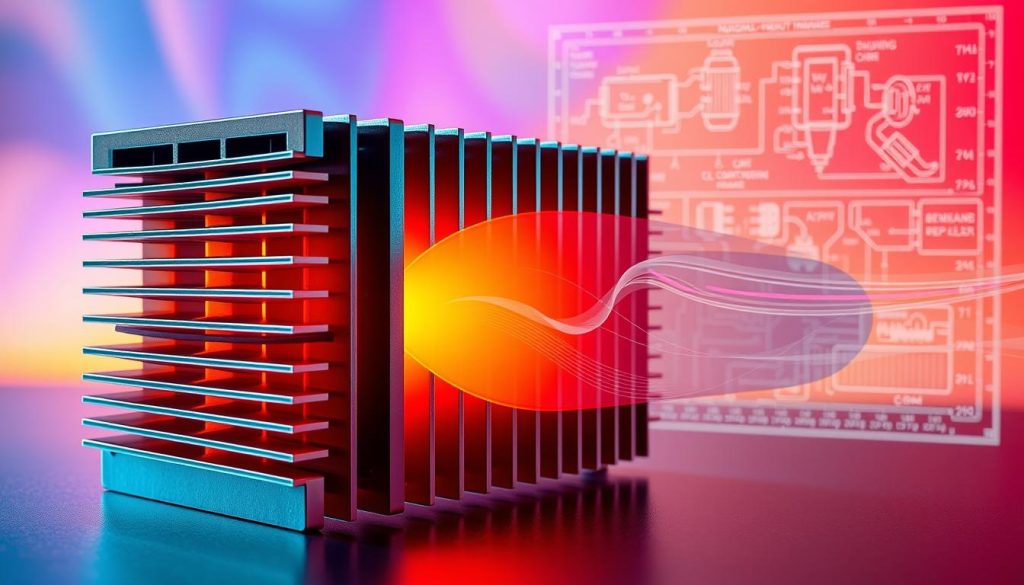
Engineers can make better thermal systems by focusing on these factors. This leads to devices that last longer and work better. Good heat transfer is essential for today’s complex electronics. It will only get more important as devices get even more advanced.
How Does a Heat Sink Work in Practice
Heat sinks are key in electronics cooling. Their design greatly affects how well they work. A good heat sink can move heat away, keeping devices running smoothly. They use three main ways to do this: conduction, convection, and radiation.
Conduction Process
The conduction process moves heat through direct contact. In heat sinks, this happens when the CPU touches the sink material.
Convection Mechanics
Convection moves heat through air movement. In heat sinks, it works when the sink is in air. This lets hot air go up and cooler air come in.
Radiation Effects
Radiation moves heat through waves. In heat sinks, it’s big in high-temperature situations. Knowing these methods helps engineers make better heat sinks. This improves electronics cooling and keeps devices working well.
Common Heat Sink Materials and Designs
Choosing the right material for heat sinks is key to good thermal management. Aluminum and copper are the most common choices. Aluminum is cheaper but conducts heat well. Copper is more expensive but conducts heat even better.
Heat sinks come in different designs, like pin fin and straight fin. The design depends on the application and heat dissipation needs. Advanced heat sink configurations, like heat pipes and vapor chambers, also exist. They enhance heat transfer, perfect for high-performance needs.
Important factors to consider include:
- Thermal conductivity: The material’s ability to conduct heat.
- Cost: The material and manufacturing cost.
- Design complexity: The design’s impact on performance.
Engineers can create effective thermal management systems by choosing the right materials and designs. This is true for both high-performance computers and compact devices. The right heat sink ensures reliable and efficient operation. It’s all about dissipating heat and keeping temperatures optimal.
Factors Affecting Heat Sink Performance
When it comes to electronics cooling, a heat sink’s performance is key. The heat sink design greatly affects its heat dissipation ability. Several factors can influence its performance, like the materials used, the mounting system, and the thermal interface materials.
A well-designed heat sink can greatly enhance an electronics cooling system. The choice of materials, such as aluminum or copper, impacts its thermal conductivity and performance. The mounting system and thermal interface materials also play a role in heat transfer.
Some key factors to consider when evaluating heat sink performance include:
- Material selection and thermal conductivity
- MOUNTING system and pressure
- Thermal interface materials and their application
- Airflow and convective heat transfer
To optimize heat sink performance, it’s important to consider these factors and their interactions. By choosing the right materials, designing an effective mounting system, and applying thermal interface materials correctly, you can enhance the heat sink design and electronics cooling system.
Real-World Applications of Heat Sinks
Heat sinks are key in many electronic devices, helping with thermal management systems. Good heat sink design is important for these devices to work well. They are used in many areas, from computers to LED lights.
Some important places where heat sinks are used include:
- Computer Processing Units: They cool CPUs, stopping overheating and keeping them running well.
- Power Electronics: In devices like power supplies and motor controls, they manage heat to avoid damage.
- LED Lighting Systems: They help keep LEDs cool, making them last longer and stay bright.

In all these uses, the heat sink design must be thought out well. This ensures good thermal management systems. By knowing the needs of each area, heat sinks can be made better. This leads to better performance, reliability, and efficiency.
Conclusion: Optimizing Your Heat Sink Solution
Heat sinks are key in today’s electronics, helping manage heat. They play a big role in keeping devices cool and working well. By learning about heat transfer and different designs, you can make your heat sink better.
When picking or making a heat sink, think about what you need. Consider the environment, how much heat it needs to handle, and how much space you have. This helps you pick the best heat sink design and materials for your project.
To learn more about keeping things cool and stay current, check out more resources. Talk to other engineers too. By learning and trying new things, you help make electronics better and more efficient for everyone.


