
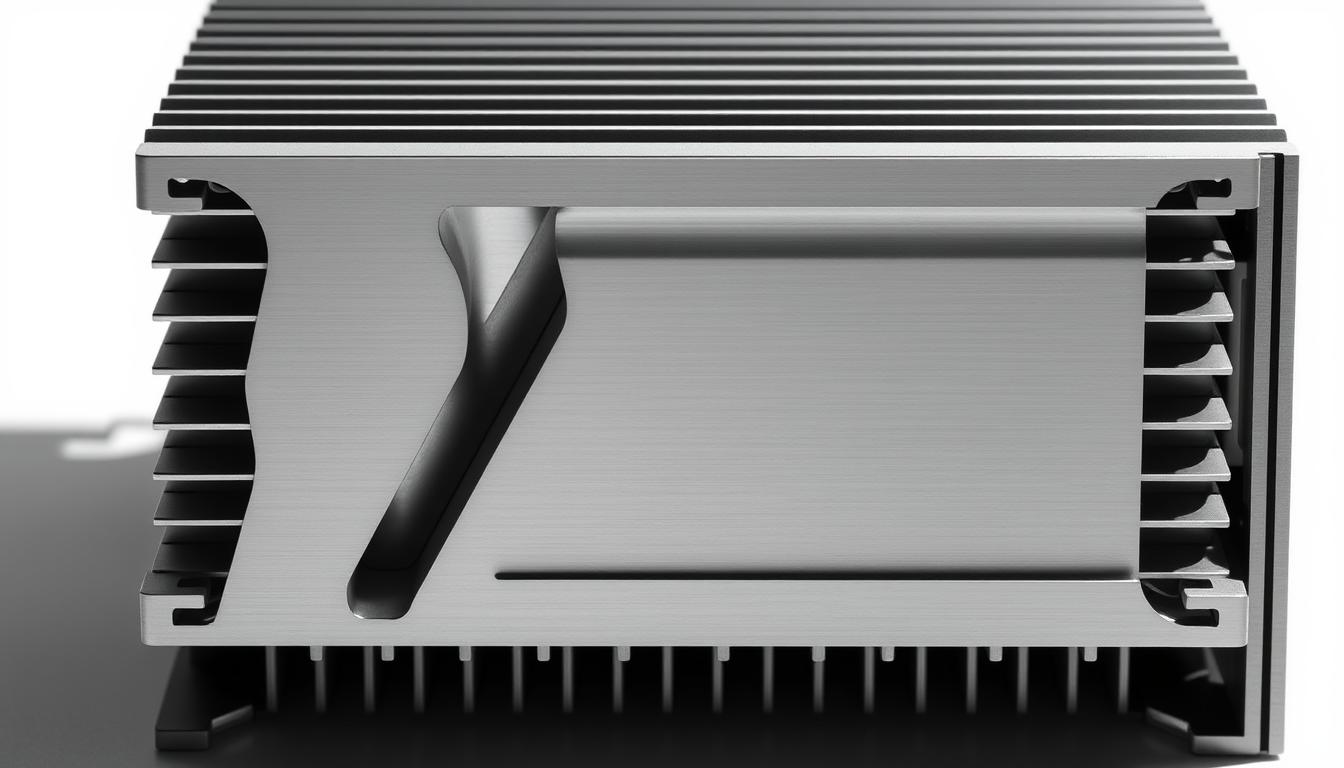
A heat sink is key in keeping electronics cool. It absorbs and spreads out heat, stopping devices from overheating. This is why it’s vital for keeping electronics running smoothly.
Good heat sink design is essential for keeping devices cool. It helps prevent failures and keeps electronics running well. Learning about heat sinks helps us see why cooling is so important in today’s tech.
Understanding the Basic Function of Heat Sinks
Heat sinks are key to keeping electronic devices at the right temperature. This is important for their performance and how long they last. Without good thermal management, devices can get too hot, fail, or not work well.
Heat sinks help by taking heat away from devices. They use materials like copper or aluminum to do this. These materials are good at moving heat away.
Definition of a Heat Sink
A heat sink is a part that helps keep devices cool. It works by moving heat away through air or touch. Heat sinks can be made from metals, ceramics, or plastics.
Primary Purpose in Electronics
The main job of a heat sink is to keep devices at the right temperature. This is key for their performance and how long they last. Heat sinks help prevent overheating and keep devices working well.
Why Temperature Control Matters
Keeping devices at the right temperature is very important. Too much heat can damage them, make them less effective, or cause them to fail. Heat sinks and other cooling methods help keep devices safe and working right.
Heat sinks are vital for keeping devices cool. Knowing how they work helps make better, more reliable electronics. This is important for making devices that last longer and work better.
What Does a Heat Sink Do in Your Electronic Devices
Heat sinks are key in keeping electronic devices cool. They help prevent overheating in things like computers, phones, and gaming consoles. The right heat sink depends on how much heat the device makes, how much space it has, and how cool it needs to stay.
The material of a heat sink matters a lot. It affects how well the device cools down. Copper and aluminum are top choices because they conduct heat well.
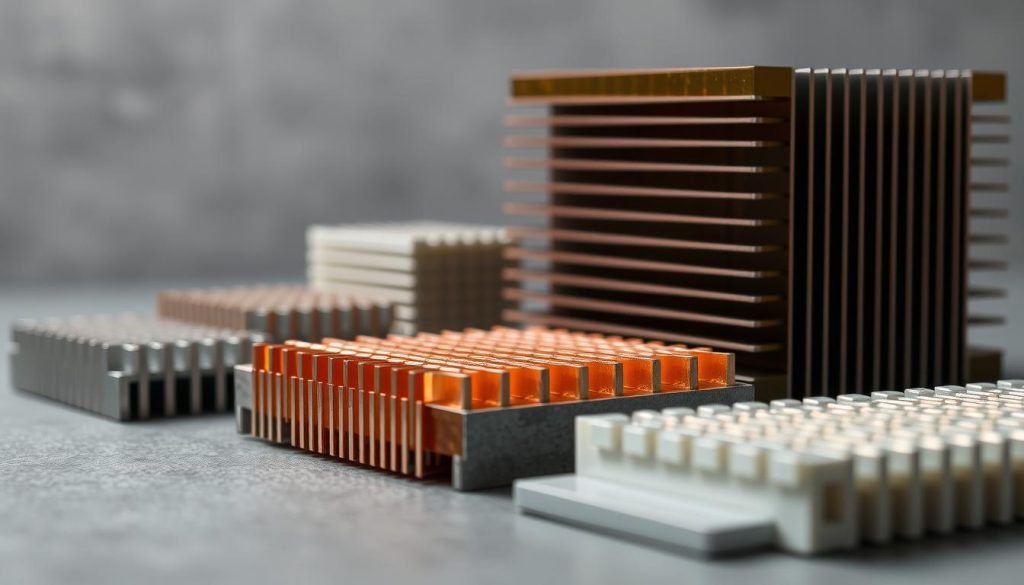
The design of a heat sink is also important. A good design can cool efficiently without taking up too much space or being too heavy. Features like fins and flat surfaces help spread out heat better.
The Science Behind Heat Sink Operation
Heat sinks are key in electronic cooling. They work by using thermal conductivity and heat transfer. Their main job is to take heat from devices and move it to air or water. This keeps devices at the right temperature and stops them from overheating.
The design of a heat sink is very important. A good design means the heat sink can transfer heat quickly. The size of the heat sink’s surface also matters. A bigger surface area means more heat can be moved away, helping devices cool better.
- Thermal conductivity of the material
- Surface area and fin design
- Airflow and fluid dynamics
Designers must think about these factors when making heat sinks. This ensures they work well and cool electronics efficiently.
Common Types of Heat Sinks
Heat sinks come in different types, each with its own benefits. The right choice depends on the device’s heat output, space, and cooling needs. Common types include plate fins, pin fins, and heat pipes.
Plate fins are a favorite for many because they’re efficient and affordable. They have a flat plate with fins to increase surface area and improve heat transfer. Pin fins, with their pins or cylinders, offer better cooling but cost more.
Heat pipes use a sealed tube filled with fluid to move heat. They’re very efficient and used in electronics and aerospace. The material choice, like copper, aluminum, or graphite, also matters. These materials are chosen for their high thermal conductivity and durability.
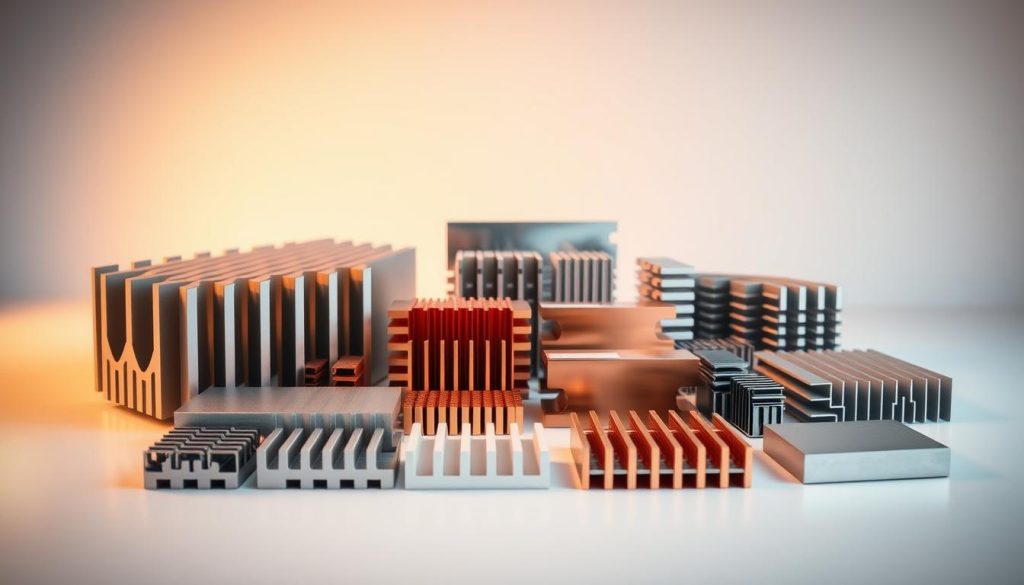
In short, the heat sink type depends on the application’s needs. By picking the right heat sink and materials, designers can make devices run smoothly and reliably.
Key Components and Materials Used in Heat Sinks
Choosing the right materials and components is key for thermal management in electronics. The goal is to transfer and dissipate heat efficiently. This is critical for the reliability and performance of electronic devices. Materials with high thermal conductivity are essential for this purpose.
The design of a heat sink, including its shape, size, and surface area, affects its cooling efficiency. Thermal interface materials improve the thermal contact between the heat sink and the device. This ensures maximum heat transfer and cooling efficiency. These materials are vital in electronics cooling systems, reducing thermal resistance and increasing heat dissipation.
Some key components and materials used in heat sinks include:
- Metal alloys with high thermal conductivity, such as copper and aluminum
- Thermal interface materials, such as thermal tapes and greases
- Design features, such as fins and heat pipes, to increase surface area and enhance heat transfer
In developing electronics cooling systems, advanced materials and design features are essential. By choosing the right materials and components, manufacturers can ensure their devices work well, even in hot environments.
Applications and Benefits in Modern Electronics
Heat sinks are key in modern electronics. They help make devices smaller, faster, and more powerful. By cooling down, heat sinks keep electronic parts at the right temperature. This ensures they work well and don’t overheat.
In computers, heat sinks are vital for cooling CPUs and graphics cards. They let these chips work at their best without losing stability or lifespan. This is true for smartphones and gaming consoles too.
These devices have powerful processors and graphics processors. Heat sinks keep these parts cool, preventing failures and improving battery life. As technology advances, the need for heat sinks will grow even more.


