
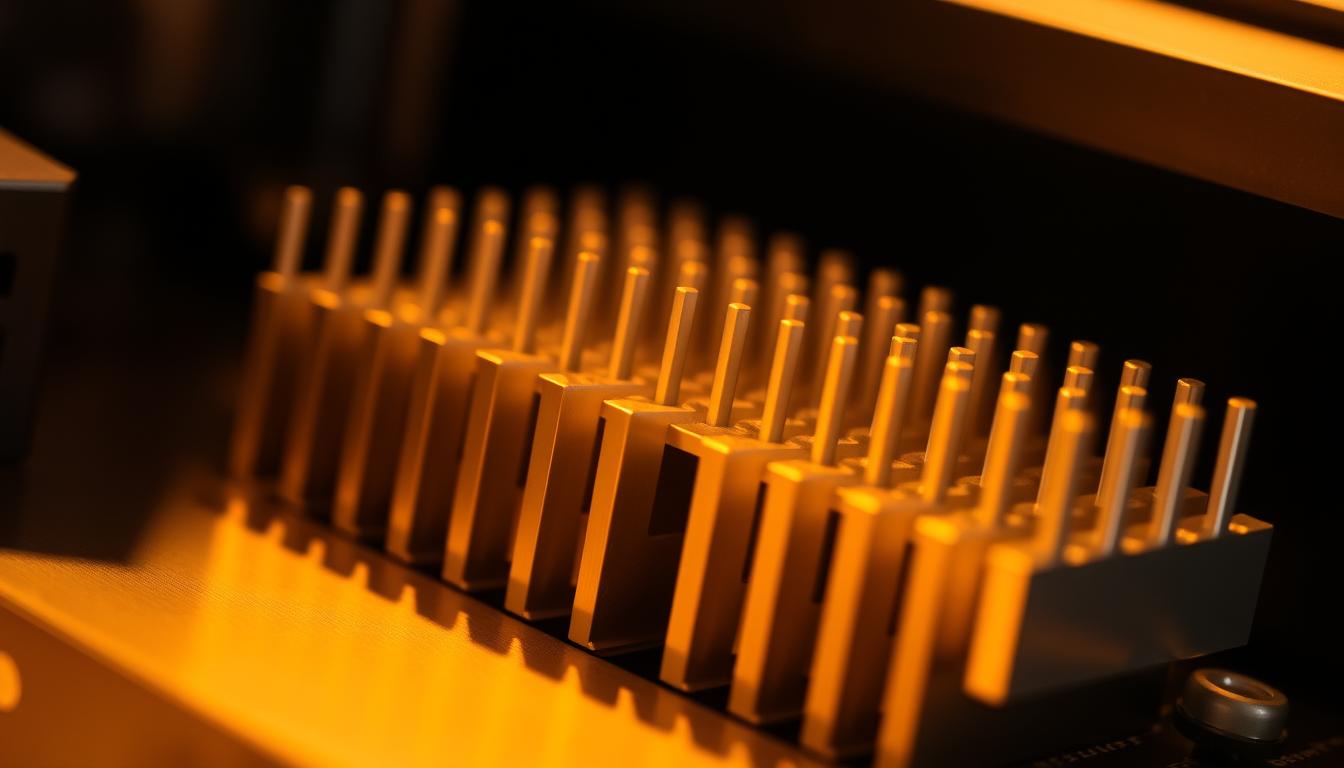
A heat sink is a key part of electronic devices. It helps cool down the heat from the device’s parts. This is vital for keeping the device at a safe temperature.
Learning about heat sinks shows how important they are. They help your electronics work well and last longer. This makes them essential for cooling electronics.
The Basic Function of a Heat Sink
A heat sink is key in electronic devices. It moves heat from a source to air or liquid, keeping devices cool. This is vital for their performance and to avoid damage from overheating.
The heat sink helps manage heat through conduction, convection, and radiation. Knowing how heat transfer works helps us see why heat sinks are so important. They keep devices running well and last longer.
Some important things about heat sinks include:
- Material selection: They’re often made from copper or aluminum for good heat transfer.
- Surface area: The size of the heat sink’s surface affects how well it can cool.
- Fin design: The shape of the fins on a heat sink greatly impacts its cooling ability.
In short, heat sinks are essential for keeping electronic devices cool and working right. By understanding heat transfer and heat sink design, makers can create devices that are both reliable and efficient.
How Heat Sinks Work
Heat sinks help move heat from electronic devices to the air around them. Their design is key to keeping devices working well for a long time. By understanding how they work, designers can make better cooling systems for today’s electronics.
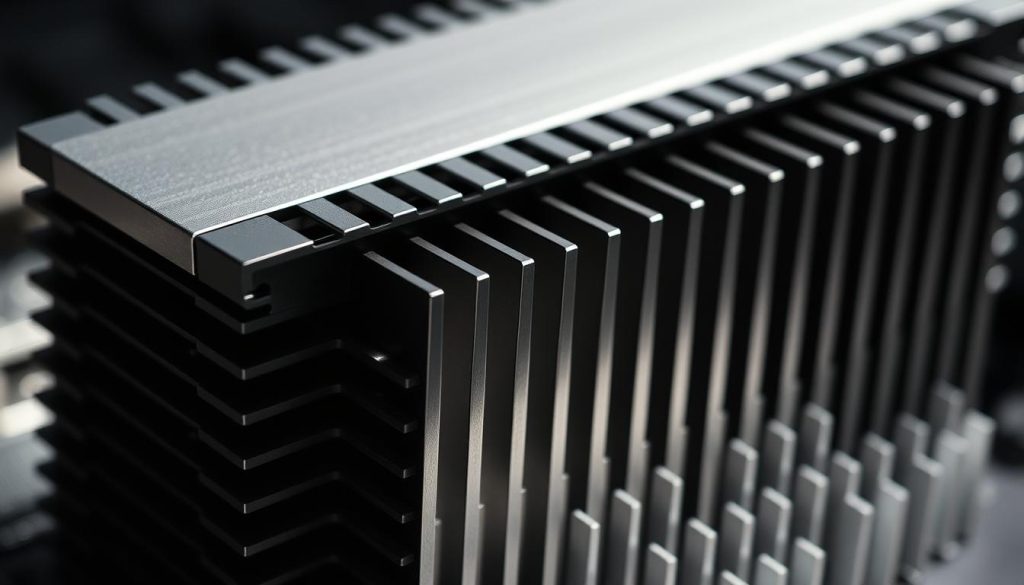
Heat transfer happens when a device absorbs heat and then releases it into the air. This process uses heat transfer mechanisms like conduction, convection, and radiation. The surface area and material of the heat sink matter a lot. For example, a bigger surface area helps spread heat out faster, and materials with high thermal conductivity work better.
- Material properties: The thermal conductivity and specific heat capacity of the material used in the heat sink design
- Surface area: The larger the surface area, the more efficient the heat dissipation
- Airflow: The flow of air around the heat sink can enhance convection and radiation
Designers can make heat sinks more effective by focusing on these factors. This way, they can create cooling systems that keep electronic devices running smoothly.
Common Types of Heat Sinks
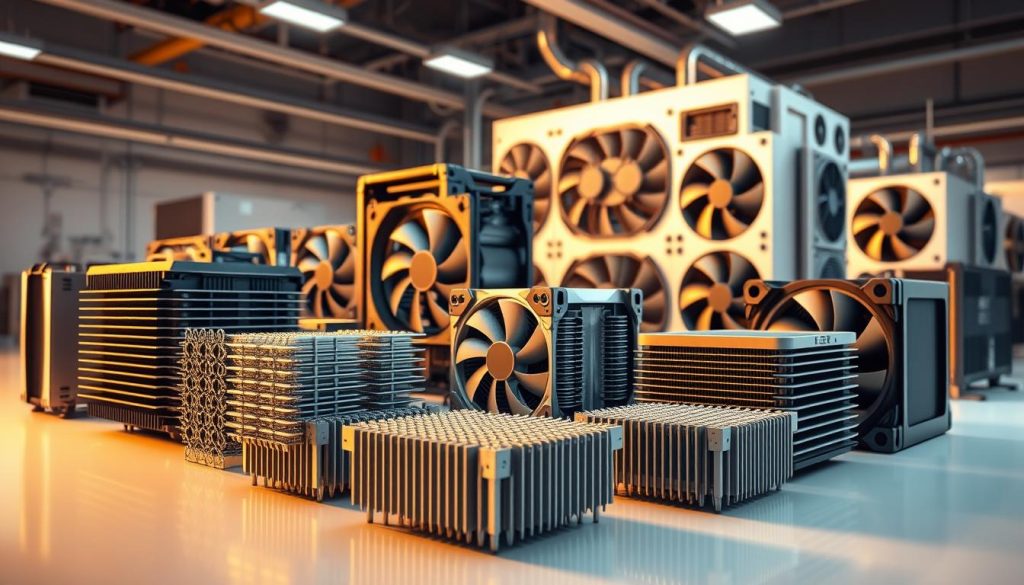
There are many heat sink types, each for different cooling needs. Extruded heat sinks are well-liked for their high heat transfer and flexibility. They are made by extrusion, allowing for detailed shapes.
Stamped heat sinks are made by bending a metal sheet into a shape. Bonded heat sinks are made by sticking metal layers together. Each has its own benefits and uses.
Knowing about different heat sinks is key to picking the right one. Extruded heat sinks are great for high-power devices like computer chips. They efficiently move heat away.
When picking a heat sink, think about the device’s power, temperature, and where it’s used. The right heat sink ensures your device works well and lasts long. Whether it’s extruded heat sinks or others, knowing the options helps make a smart choice.
Applications and Uses in Electronics
Heat sinks are key in many electronic devices. They keep these devices from getting too hot. This is important for their performance, reliability, and how long they last.
They are used in many places, like computer processing units (CPUs), graphics cards, and industrial equipment. Designers make heat sinks that fit each device’s needs. This ensures they cool properly.
Some main places where heat sinks are used include:
- Computer Processing Units (CPUs)
- Graphics Cards and Gaming Systems
- Industrial Equipment
- LED Lighting Systems
Heat sinks prevent overheating. Overheating can cause devices to slow down, get damaged, or even stop working. With good heat sinks, devices work better and last longer.
In the world of electronics, heat sinks are always getting better. As devices get smaller and more powerful, cooling them becomes more important. New heat sink designs and materials help make devices faster and more efficient.
Heat Sink Materials and Design Features
Heat sink materials come in many types, each with special traits. Aluminum, copper, and graphite are popular choices. They vary in how well they conduct heat, their strength, and price. Picking the right material is key to a heat sink’s success.
Design aspects like fin density, surface roughness, and coatings also matter. Thermal interface materials help transfer heat from the source to the sink. This ensures cool operation. By focusing on these details, designers craft efficient cooling solutions for today’s electronics.
Important factors to think about include:
- Thermal conductivity: How well the material moves heat away from the source.
- Strength and durability: The material’s toughness against stress and the environment.
- Cost: The material’s price and the heat sink’s overall value.
Conclusion: Maximizing Heat Sink Performance for Better Device Longevity
Heat sinks are key to keeping electronic devices running well. They help devices last longer and work better. By choosing the right heat sink, designers can make products that need less upkeep and last longer.
Heat sinks protect important parts in computers and other devices. They keep the temperature right for things like graphics cards and LED lights. The right heat sink makes devices reliable and helps them last longer, giving users a better experience.


