

Effective thermal management is key for electronic devices to work well. Heat sink materials, like aluminum, are important for this. Aluminum is chosen for its great thermal conductivity and low cost.
Knowing why aluminum is good for cooling is important. It helps in making better cooling systems. This makes electronic devices more reliable. In this guide, we’ll explore why aluminum is the preferred material for heat sinks, its advantages, and how it compares to other materials. By looking into aluminum heat sinks, we learn more about their role in cooling. We also see their uses in different industries.
The Basic Principles of Heat Sink Materials
Thermal Conductivity
Thermal conductivity is the ability of a material to transfer heat. Materials with high thermal conductivity, like aluminum, are ideal for heat sinks because they efficiently move heat away from electronic components.
Surface Area
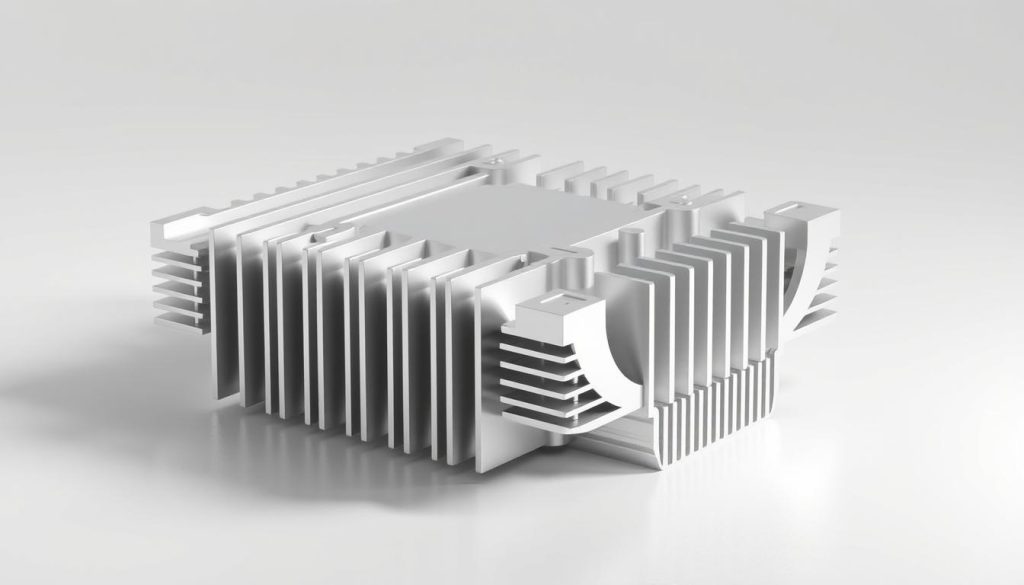
A larger surface area allows for better heat dissipation. Heat sinks are often designed with fins or ridges to maximize surface area, enhancing their cooling capabilities.
Material Properties
Other important properties include:
- Density: Lighter materials like aluminum are easier to handle and install.
- Specific Heat Capacity: Materials with high specific heat capacity can absorb more heat, improving cooling efficiency.
By focusing on these aspects, manufacturers can make materials that cool efficiently.
Why Are Heat Sinks Made of Aluminum: Key Advantages
Aluminum heat sinks are popular in thermal management, some main benefits of aluminum heat sinks are:
- High thermal conductivity for efficient heat dissipation
- Low density for reduced weight and increased portability
- High specific heat capacity for enhanced thermal management
- Cost-effectiveness in production and manufacturing
- Versatility in various applications, from consumer electronics to industrial equipment
Aluminum heat sinks are vital in thermal management. Their benefits make them a top pick in many fields.
Manufacturing and Cost Benefits of Aluminum Heat Sinks
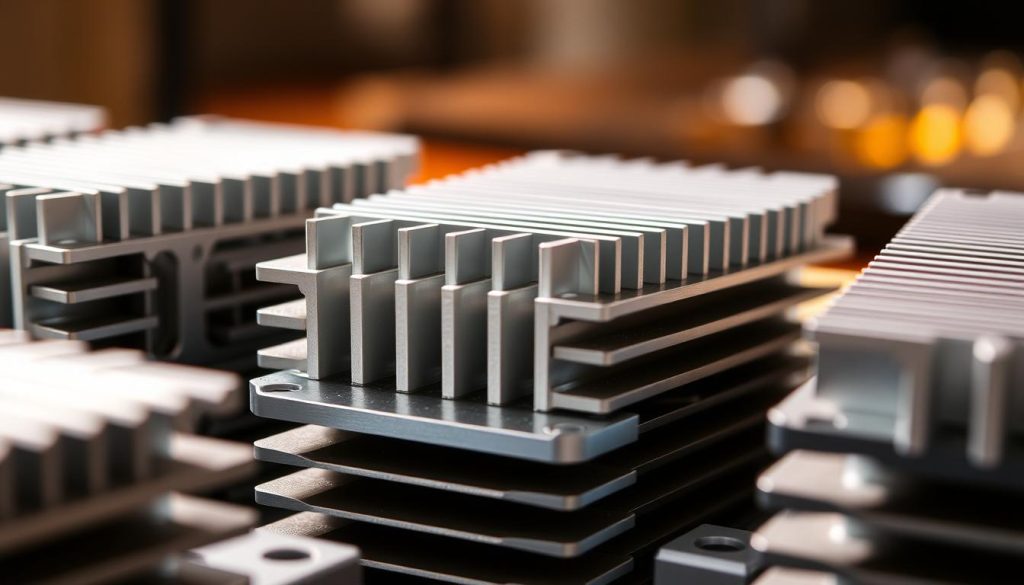
Aluminum heat sinks are popular in many fields because they conduct heat well and are affordable. Making these heat sinks involves aluminum extrusion. This method lets us create complex shapes and designs. After extrusion, the aluminum goes through a fabrication process. This includes cutting, machining, and finishing to meet exact needs.
Aluminum heat sinks are also cost-effective. They cost less per unit than other materials. This is because aluminum is cheaper and the extrusion and fabrication process is efficient. Plus, they can handle high heat, making them great for applications where cooling is key.
Comparing Aluminum to Other Heat Sink Materials
Aluminum isn’t the only choice for heat sinks. Copper heat sinks are popular in high-performance areas. Copper is better at conducting heat than aluminum.
But, copper costs more than aluminum. This can affect the
Other materials like graphite and silicon carbide are also used. They have special properties for certain needs. For example, graphite is great for high-temperature uses.
Key Considerations for Heat Sink Materials
- Thermal conductivity: The ability of the material to conduct heat away from the source.
- Cost: The price of the material, including production and manufacturing costs.
- Performance: The ability of the material to meet the specific requirements of the application.
The right heat sink material depends on many things. These include price-to-performance, how well it conducts heat, and what it’s used for. Designers and engineers can pick the best material for their projects. This could be aluminum, copper heat sinks, or alternative materials.
Conclusion: The Future of Aluminum in Thermal Management
The electronics world is always changing, and aluminum heat sinks will play a key role in thermal management. New trends like advanced materials and new ways to make things are changing this field.
Nanomaterials are set to be big in the future of heat sinks. They can handle heat better and help cool electronics more efficiently. Also, 3D printing is changing how heat sinks are made. It lets us make them in new ways that fit different devices better.
Aluminum heat sinks will also keep being popular because they’re cheap and good for the planet. As technology advances, aluminum will keep being a top choice for keeping electronics cool. It’s flexible and works well for many different devices.
FAQ
What are the key advantages of using aluminum for heat sinks?
Aluminum is great for heat sinks because it conducts heat well and is light. It’s also affordable and easy to make. These qualities make it a top pick for cooling electronic devices.
How does the design flexibility of aluminum heat sinks benefit the thermal management industry?
Aluminum can be shaped in many ways. This lets designers make heat sinks that fit exactly what’s needed. It helps improve how well heat is managed.
What are some emerging trends and technologies in the use of aluminum for thermal management?
The world of electronics is always changing. Scientists and engineers are finding new ways to make aluminum heat sinks better. They’re looking at new ways to make them, using tiny materials, and mixing aluminum with other stuff for even better cooling.


