
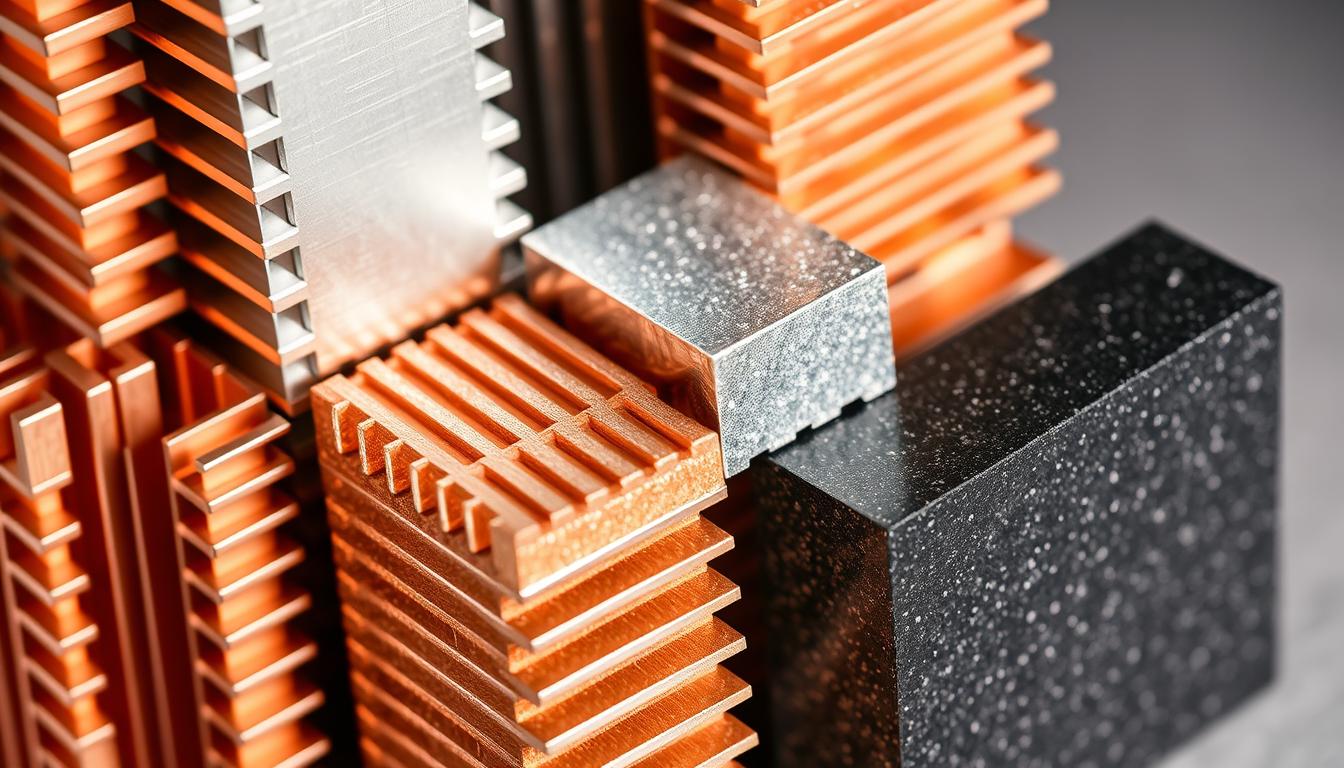
Heat sinks are key in keeping electronics cool. They help spread out heat, keeping devices at the right temperature. This is important to avoid overheating, which can harm performance and damage devices.
Knowing the different materials used in heat sinks is important. Options range from aluminum and copper to advanced composites. Each has its own benefits. Choosing the right material is critical for the performance and reliability of electronic devices.
Understanding Heat Sinks and Their Purpose
Heat sinks are key to keeping electronic devices at the right temperature. They soak up and spread out heat, stopping devices from overheating. This is important for keeping devices working well and lasting longer.
Heat sinks help cool devices by moving heat away. They use materials like metals that are good at transferring heat. Knowing how heat sinks work helps make devices better and last longer.
- Material selection: Choosing materials with high thermal conductivity to maximize heat transfer
- Design and configuration: Optimizing the design to increase surface area and facilitate air flow
- Thermal interface: Ensuring a secure and efficient connection between the heat sink and the device
By focusing on these areas, makers can make heat sinks that keep devices cool and working well. This means devices can perform better and last longer.
Common Materials Used in Heat Sink Manufacturing
When it comes to heat sink materials, there are many options. But some stand out for their top-notch properties. Aluminum and copper are two favorites in heat sink making. They’re known for their high thermal conductivity and lasting durability.
These materials are picked for their heat-dissipation skills. This is key in electronic devices. Heat sink materials like aluminum and copper can handle high heat without losing shape.
Some key traits of these materials include:
- High thermal conductivity for efficient heat dissipation
- Durability to withstand high temperatures and mechanical stress
- Cost-effectiveness and availability in the market

In the world of heat sink materials, aluminum and copper are often compared. While copper conducts heat better, aluminum is cheaper and easier to find. This makes aluminum a favorite for many uses.
Aluminum Heat Sinks: The Popular Choice
Aluminum heat sinks are a top pick for heat dissipation. They are known for their high thermal conductivity, resistance to corrosion, and affordability. These heat sinks are used in many fields, like electronics, cars, and space technology.
Aluminum is great for moving heat away from sources. It also doesn’t corrode easily, making it durable. Plus, aluminum heat sinks are cheaper than some other materials, like copper.
Benefits of Aluminum in Heat Dissipation
- High thermal conductivity
- Corrosion resistance
- Affordability
There are different grades of aluminum heat sinks, each with special properties. The right grade depends on the application’s needs, like temperature, conductivity, and strength. Choosing the right aluminum ensures the heat sinks are cost-effective materials that work well.
Cost-Effectiveness and Availability
Aluminum heat sinks are easy to find and buy. They are affordable, which helps manufacturers save money. With their good heat dissipation, resistance to corrosion, and low cost, aluminum heat sinks are a smart choice for many uses.
Copper Heat Sinks and Their Applications
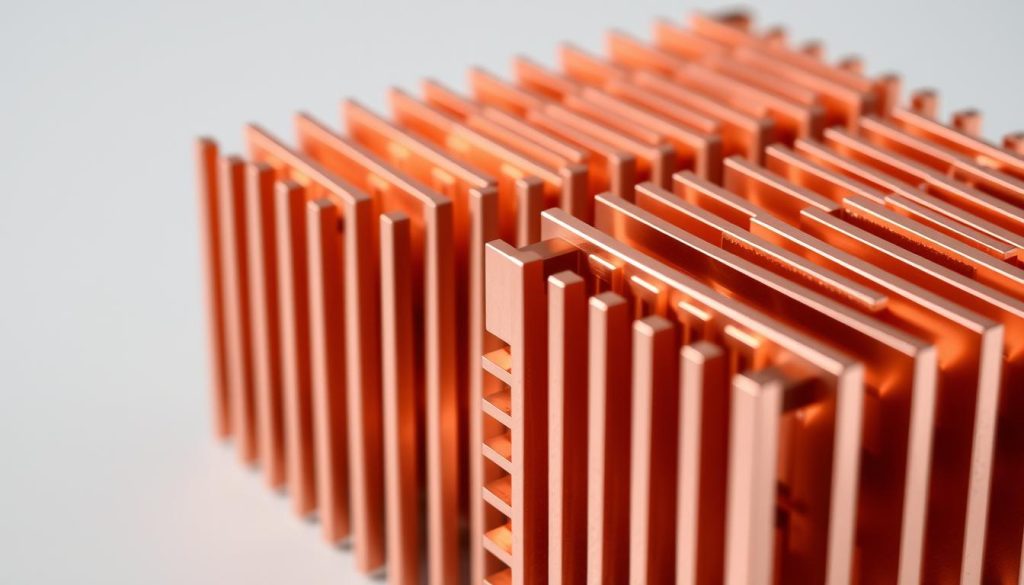
Copper heat sinks are top-notch for high-performance applications like aerospace and medical devices. They are great at managing heat, which is key for these fields. This ensures devices work well and don’t overheat.
Copper heat sinks can handle high temperatures and manage heat well. They are used in many areas, including:
- High-performance electronics
- Aerospace
- Medical devices
Even though copper heat sinks are pricey and can corrode, they’re vital in high-performance applications. Their ability to manage heat is unmatched, making them essential.
What Are Heat Sinks Made Of: Advanced Materials and Composites
Technology keeps getting better, and so does the need for better heat sink materials. New materials like carbon-based ones are being made to meet this need. They are great because they conduct heat well, last long, and are flexible.
Carbon-Based Materials
Graphene and carbon nanotubes are being used to make advanced heat sinks. They are very good at conducting heat. Plus, they are light and can bend, making them useful in many ways.
Thermal Interface Materials
Thermal interface materials, like tapes and greases, help heat sinks work better. They fill in gaps and make sure heat moves well. New versions of these materials are being made to help heat sinks work even better.
Using advanced materials like carbon and thermal interfaces helps make better heat sinks. These can make electronic devices work better, last longer, and be smaller and lighter.
Heat Sink Design Features and Efficiency
Efficiency is key in heat sink design. A good heat sink keeps your electronics cool and running well. Fin configurations are very important. The shape, size, and how fins are arranged affect how well the heat sink works.
By optimizing fin configurations, you can increase the heat sink’s surface area. This lets it absorb and release more heat.
Surface area optimization is also critical. A bigger surface area means the heat sink can handle more heat. Advanced materials and manufacturing help achieve this. For example, a design with a high surface area to volume ratio boosts efficiency.
Some key considerations for heat sink design include:
- Fin configurations: The shape, size, and arrangement of fins can greatly impact the heat sink’s ability to dissipate heat.
- Surface area optimization: Maximizing the surface area of the heat sink can increase its ability to absorb and dissipate heat.
- Air flow considerations: Proper air flow management is essential for maintaining optimal operating temperatures.
By considering these factors, you can design an efficient and effective heat sink. Whether using aluminum or copper, a well-designed heat sink is vital for keeping your electronics cool and running smoothly.
Choosing the Right Heat Sink Material for Your Application
When picking a heat sink material, several things matter. The material’s ability to conduct heat, its durability, and how affordable it is are key. Application-specific materials are made to fit each use perfectly. Choosing the right one is essential for good thermal management.
The right material for a heat sink depends on the application and needed performance. Consider the operating temperature, power dissipation, and environment. This helps designers pick the best material for their heat sink, ensuring it works well.
For the best thermal management, see the heat sink as part of the whole system. Look at how it works with other parts, like the heat source and cooling system. A complete approach to heat sink material selection and application-specific materials leads to efficient thermal systems.
Conclusion: Making Informed Decisions About Heat Sink Materials
The choice of heat sink materials is key for keeping electronic systems cool. We’ve seen how aluminum, copper, and new composites each have their own strengths. When picking heat sink materials, think about thermal conductivity, how long they last, cost, and their impact on the environment.
Knowing what each heat sink material can do helps engineers and designers make smart choices. These choices improve how well systems work, how reliable they are, and how much energy they use. The right heat sink design and material keep things running smoothly and prevent overheating.
As technology gets better, we’ll need even smarter ways to keep things cool. Staying up-to-date with new heat sink materials and designs helps professionals meet these challenges. This way, they can create systems that are efficient and reliable, driving the digital world forward.


