

Heat sinks are key in electronic devices. They help keep devices cool and working well. It’s important to pick the right heat sink for your device’s performance and reliability.
Choosing the right heat sink can be tough with so many options. This guide will help you pick the best heat sink for your needs. We’ll cover the basics and important factors like thermal management and materials.
Understanding Heat Sink Basics
Heat sinks are key in electronics cooling. They absorb and spread out heat from electronic parts. This keeps parts from overheating and getting damaged. It makes sure they stay within a safe temperature range.
A heat sink has a big surface area for heat to escape. This lets the part work better. The heat sink design is very important for cooling electronic parts. There are many types of heat sinks, each for different uses.
These heat sinks are used in many electronics cooling jobs. This includes cooling CPUs, LED lights, and power electronics. Knowing about heat sinks and their design helps pick the best one for your device. It ensures good electronics cooling and performance.
Key Factors in Heat Sink Selection
Choosing the right heat sink involves several important factors. The type of device, its operating temperature, and the environment it’s in are all key. For example, a high-power device might need a heat sink with high thermal conductivity to cool efficiently.
When picking a heat sink, it must fit the device’s temperature range and environment. This is vital to avoid overheating and ensure the device works well. Important considerations include:
- Device type and power rating
- Operating temperature range
- Environmental conditions, such as humidity and airflow
- Thermal conductivity and heat dissipation requirements
By looking at these factors, you can find a heat sink that fits your needs. This ensures your device runs smoothly. 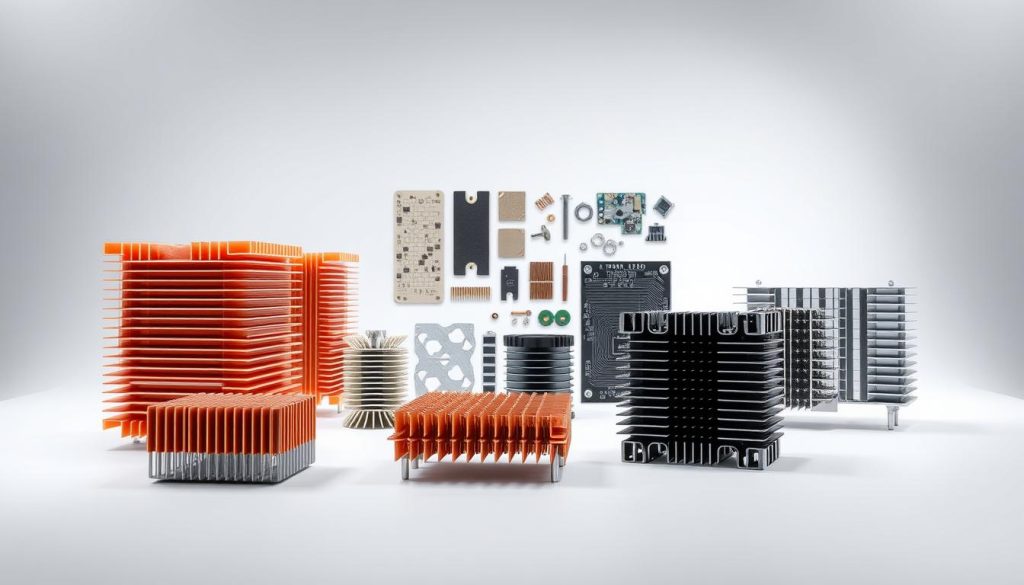
Material Properties and Their Impact
Choosing the right heat sink material is key to your device’s performance. Here are some important things to think about:
- Thermal conductivity ratings: This shows how well a heat sink can cool down.
- Density: A denser material might cool better but could make your device heavier.
- Cost: The price of the material can vary a lot, based on its type and quality.
By looking at these points and what your device needs, you can pick the best material.
| Material | Thermal Conductivity (W/mK) | Density (g/cm³) | Cost |
|---|---|---|---|
| Aluminum | 237 | 2.7 | Low-Moderate |
| Copper | 386 | 8.96 | High |
How to Choose the Right Heat Sink for Your Device
Choosing the right heat sink is key for cooling electronics. A good heat sink boosts your device’s performance and life. You must think about thermal needs, size, and airflow when picking one.
Calculating Thermal Requirements
First, figure out your device’s thermal needs. This means knowing how much heat it makes and its max temperature. Use online tools or talk to a thermal expert to get this info.
Size and Space Constraints
The size and space of your device matter a lot. You need a heat sink that fits well without being too big or small. The wrong size can mess up cooling efficiency.
Airflow Considerations
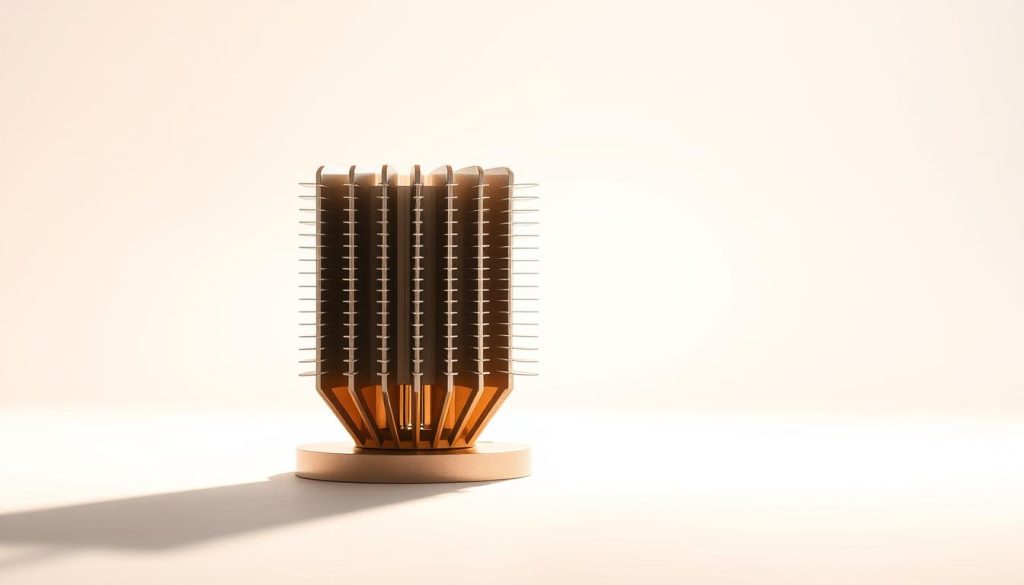
Airflow is another key factor. Think about your device’s fans or vents and how they impact the heat sink. A high airflow heat sink might cool better but could also be noisier.
Mounting Methods and Compatibility
When it comes to heat sink applications, how you mount it matters a lot. The heat sink needs to fit with the device’s mounting system well. A good mount is key for safe and steady operation. There are a few ways to mount a heat sink, like clips, screws, or glue. Each has its own good and bad points.
Some important things to think about include:
- Device operating temperature range
- Environmental conditions
- Mounting system compatibility
- Secure and reliable connection
By picking the right mount and heat sink, designers and engineers can make sure things work well.
Common Heat Sink Applications
Heat sinks are used in many areas, like cooling CPUs, LED lights, and power electronics. The right materials for heat sinks are key to keeping electronics cool. They help keep devices running smoothly and efficiently.
Applications of Heat Sinks
- CPU Cooling Solutions: Heat sinks are used to dissipate heat from the processor, ensuring reliable operation.
- LED Lighting Systems: Heat sinks are used to dissipate heat from the LEDs, ensuring optimal performance and longevity.
- Power Electronics: Heat sinks are used to dissipate heat from power components, such as transistors and diodes.
In summary, heat sinks are essential in many fields. Choosing the right materials for heat sinks is critical for efficient cooling.
Conclusion: Making Your Final Heat Sink Decision
Choosing the right heat sink is key to your device’s success. It affects how well it works and lasts. Think about the material, how well it conducts heat, and its price. This ensures your device runs smoothly and stays cool.
When deciding, think about what your device really needs. You might need to talk to experts or do more research. The right heat sink keeps your device running well for a long time.
FAQ
What is a heat sink?
A heat sink is a part that helps keep electronic devices cool. It stops them from getting too hot and damaged.
How do heat sinks work?
Heat sinks have a big surface area. This lets heat escape, keeping the device at a safe temperature.
What are the different types of heat sinks available?
There are plate fins, pin fins, and heat pipes. Each type is made for different uses.
How do I calculate the thermal requirements for my device?
You need to figure out how much heat your device can handle. This helps choose the right heat sink.


