

Heat sinks are essential components in cooling systems, designed to absorb and dissipate heat from electronic devices, industrial machinery, and more. While traditional heat sinks are made from materials like aluminum and copper, water-based cooling systems are gaining popularity due to their efficiency and versatility. But can pure water act as a heat sink? This guide explores the science behind water as a cooling medium, its advantages, limitations, and practical applications.
The Basic Principles of Heat Sinks and Cooling Systems
Heat sinks and cooling systems are key in many fields, like electronics and manufacturing. Knowing how they work is vital for making cooling solutions that are effective.
Thermal conductivity
A key idea is thermal conductivity, which shows how well a material can move heat. Materials like copper and aluminum are good at this because they can carry heat away well.
Heat capacity
Heat capacity is also important. It tells us how much heat a material can take before its temperature goes up a lot. Materials with high heat capacity can handle more heat without getting too hot.
Heat transfer
The way heat moves, or heat transfer, is another critical aspect. It happens through conduction, convection, or radiation.
Phase change
Phase change is another important part of cooling systems. It’s when a material changes from solid to liquid or vice versa, taking in or giving out heat. This helps move heat away from a source efficiently.
By grasping these basics, designers and engineers can make heat sinks and cooling systems that work well for different needs.
Can Pure Water Act as Heat Sink? Scientific Analysis
Water is great at cooling because it can hold and move heat well. It has a high specific heat capacity and thermal conductivity. These traits make it a good candidate for cooling things down.
Water’s density and viscosity also matter. They affect how fast it flows and how well it transfers heat. This is important for its cooling power.
Looking into water’s role as a heat sink means studying its physical traits. For instance, its specific heat capacity is about 4.18 J/g°C. This means it can take in a lot of heat without getting too hot itself. This is why water is so good at cooling things down.
Several factors influence how well water cools as a heat sink. These include:
- Temperature range: Water cools best when it’s between 20°C and 80°C.
- Flow rate: Faster water flow means better cooling.
- Surface area: The area where water touches the heat sink matters too.
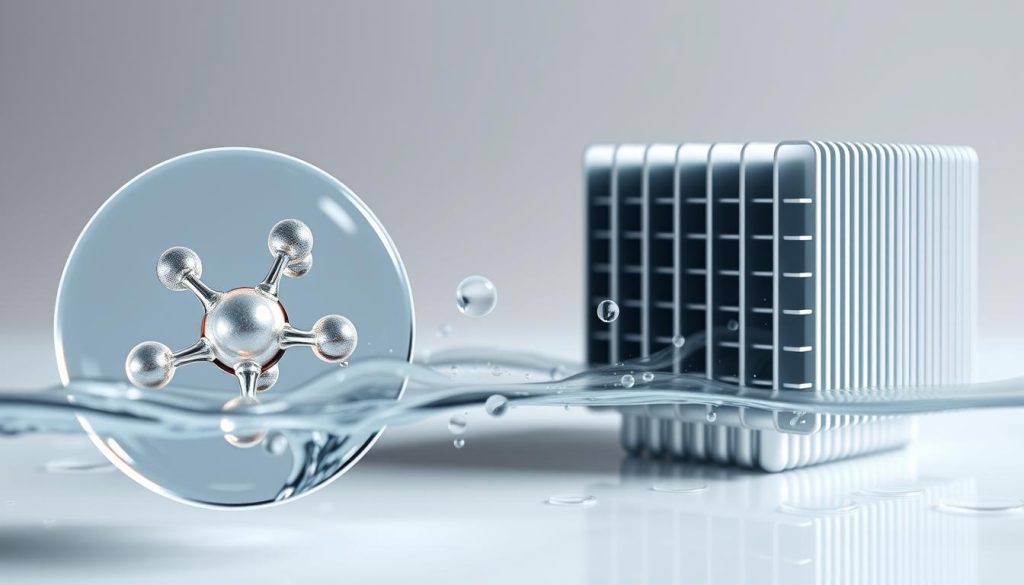
Unique Properties of Water for Heat Absorption
Water’s ability to absorb heat is due to its special properties. It has a high specific heat capacity. This means it can hold and release a lot of heat without its temperature changing much. Its thermal conductivity characteristics also help it move heat away from sources efficiently.
The phase change benefits of water are also key. When water turns from liquid to gas, it takes in a lot of heat. This makes it great for cooling in situations with high heat.
- High specific heat capacity, allowing for efficient heat energy storage and release
- Good thermal conductivity characteristics, enabling effective heat transfer
- Phase change benefits, providing significant cooling capabilities
These traits make water a top choice for heat sinks. It’s perfect for managing high heat fluxes. Water-based heat sinks offer effective cooling for many uses.
Practical Applications of Water-Based Heat Sinks
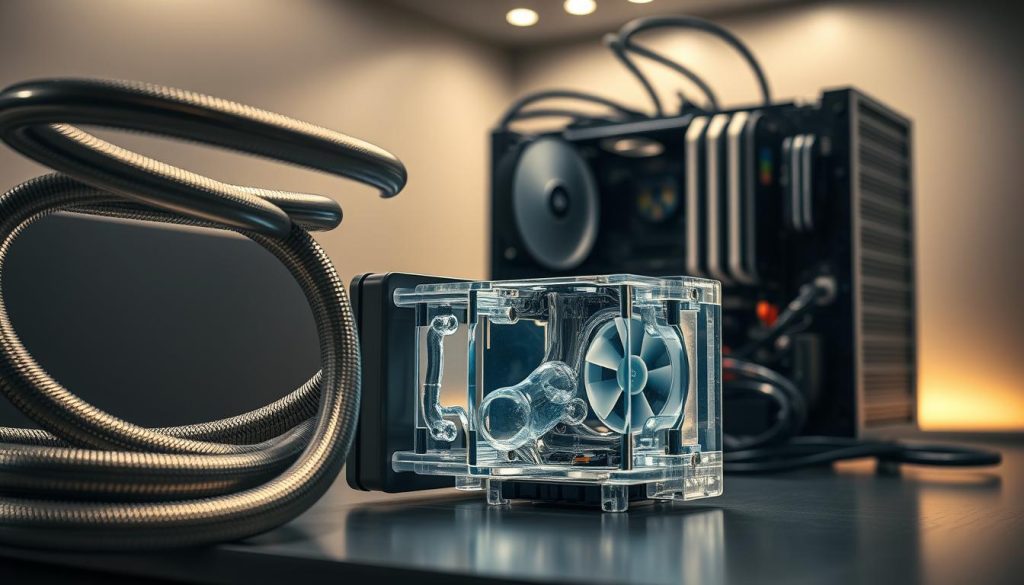
Water cooling systems are key in many industries because they’re efficient and cost-effective. They’re mainly used in computer cooling systems to keep high-performance computers and servers cool. This helps them run smoothly and last longer.
Here are some examples of water-based cooling systems:
- Data centers, where they cool servers and other equipment.
- Industrial processes, like manufacturing and machining, to cool down tools and equipment.
- Automotive applications, to cool down engines and other components.
Comparing Water to Other Heat Sink Materials
Here are some key points to consider when comparing water to other heat sink materials:
Cost-effectiveness
Water cooling might cost more to start, but it saves money in the long run. Metal heat sinks are cheaper at first but need more upkeep and might need to be replaced more often.
Environmental considerations
Environmental considerations also matter, as water cooling can cut down on waste and pollution from metal heat sinks.
Thermal conductivity
Metal heat sinks have high thermal conductivity, but water cooling systems can absorb and dissipate heat efficiently.
In conclusion, choosing between water and metal heat sinks depends on several factors. These include cost, environmental impact, and how well they handle heat. By looking at these points, people can decide which heat sink material works best for them.
Limitations and Considerations When Using Water as a Heat Sink
Using water as a heat sink has its limits and things to think about. The biggest issue is the temperature range water can handle. Water’s ability to absorb and release heat is limited, which can be a problem in very hot or cold places.
Another important thing is how much work it takes to keep water-based heat sinks running well. They need regular care to avoid problems like corrosion and growth of living things. A good system design can help, but it’s also important to think about how much upkeep it will need.
Some key things to keep in mind for water-based heat sinks include:
- Temperature range: 0°C to 100°C
- Maintenance requirements: regular cleaning, water treatment, and component inspection
- System design: careful planning of the heat sink’s layout, material selection, and fluid dynamics
Knowing these limitations and things to think about helps designers and engineers make better water-based heat sinks. They can focus on the temperature range, maintenance requirements, and system design challenges.
Conclusion: The Future of Water-Based Cooling Solutions
Water-based cooling systems are a highly effective and versatile solution for managing heat in various applications. While pure water cannot act as a traditional heat sink, its unique properties make it an excellent cooling medium when used in closed-loop systems.
As technology advances, water-based cooling systems are likely to become even more efficient and widely adopted. By understanding the advantages, limitations, and design considerations of water-based cooling, you can determine whether it is the right solution for your thermal management needs.
FAQ
What properties make water a good heat sink?
Water is great at cooling because it can hold a lot of heat without getting too hot. It also transfers heat well, making it efficient for cooling.
What are the limitations of using water as a heat sink?
Water is not perfect for cooling. It can only handle certain temperatures, needs careful setup, and can freeze or evaporate in some places.
How can water-based cooling systems be designed and implemented effectively?
To make water cooling systems work well, you need to think about a few things. These include how fast the water flows, the pressure, and how everything fits together. Making sure the system is well-designed and maintained is key to its success.


