

Adhesive heat sinks are key in keeping electronics cool. They help transfer heat away from devices to prevent overheating. This is vital for keeping devices running well and lasting longer.
Learning about adhesive heat sinks helps us see their importance in cooling electronics. This guide will cover the basics of how they work, their uses, and their benefits. It aims to help you understand your thermal management needs better.
Understanding Adhesive Heat Sinks
The parts of an adhesive heat sink include a base, adhesive, and a substrate. The adhesive is put on the base, then it’s stuck to the substrate, which is usually an electronic device. This setup helps move heat from the device to the heat sink, making it more efficient.
When picking adhesive materials, look at their thermal conductivity, adhesive strength, and how long they last. Thermal conductivity shows how well a material can carry heat. Adhesive strength is how well it sticks the heat sink to the device.
Some common thermal adhesives are:
- Silicone-based adhesives, known for their high thermal conductivity and flexibility
- Epoxy-based adhesives, which offer excellent adhesive strength and chemical resistance
- Acrylic-based adhesives, providing a balance between thermal conductivity and cost-effectiveness
The Science Behind Thermal Management
Understanding heat transfer, like conduction, convection, and radiation, is vital. Heat transfer is at the heart of thermal management. It’s used in making adhesive heat sinks. The aim is to move heat well from the source to the sink. This is done with thermal interfaces and materials that conduct heat well. Thermal resistance is also important. It’s the opposition to heat flow between two objects. Lowering thermal resistance helps in efficient heat transfer and avoids overheating.
Several factors influence thermal management. These include:
- Heat transfer mechanisms: conduction, convection, and radiation
- Thermal resistance: opposition to heat flow between two objects in contact
- Thermal interfaces: materials and designs that facilitate heat transfer
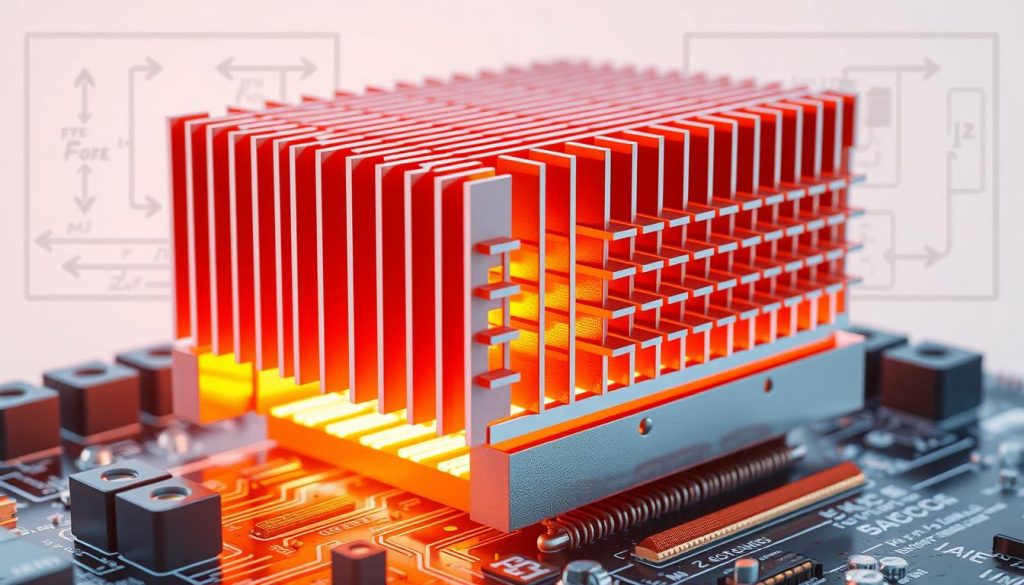
How Do Adhesive Heat Sinks Work in Practice?
These heat sinks work by moving heat from the device to the base. Then, the base spreads the heat out to the air.
Heat Transfer Principles
The heat transfer in adhesive heat sinks uses conduction and convection. The adhesive material helps in conduction, moving heat from the device to the base. Then, convection spreads the heat to the air.
Thermal Resistance Factors
Thermal resistance is important for heat sink efficiency. It’s how much heat flow is blocked between the device and the base. Things like the adhesive type, its thickness, and the surface roughness affect this.
Installation and Application Methods
When it comes to electronic cooling, installing adhesive heat sinks is key. Here are the steps for installing adhesive heat sinks:
- Surface preparation: cleaning and preparing the surface for adhesive application
- Adhesive application: applying the thermal adhesive to the heat sink
- Heat sink installation: attaching the heat sink to the electronic device
By following these steps and using the right adhesive materials, you can get a great heat sink installation. This is very important for keeping your device cool and working well, even in hot conditions.
Comparing Adhesive vs. Mechanical Heat Sinks
Choosing the right heat sink is key for efficient heat dissipation. Adhesive and mechanical heat sinks are two main options.
Here are some main differences between adhesive and mechanical heat sinks:
- Mounting: Adhesive heat sinks are simpler to install, needing less effort. Mechanical heat sinks need more complex setups.
- Performance: Adhesive heat sinks can match or even beat mechanical ones in performance.
- Cost: Adhesive heat sinks are often cheaper, which is a big plus for big projects.
The choice between adhesive and mechanical heat sinks depends on the project’s needs. Engineers and designers should think about efficiency, management, and cost. This helps decide which heat sink is best for their designs.
Common Problems and Solutions
Working with adhesive heat sinks can lead to issues like thermal resistance and heat transfer problems. These can hurt the heat sink’s performance, making it less efficient. They might even damage the device.
To fix these issues, knowing their causes is key. Thermal resistance often comes from bad contact between the heat sink and the device. Heat transfer problems can stem from poor thermal interface materials. Finding the problem’s source lets you solve it, like using better materials or adhesives.
Here are some common fixes:
- Choose a top-notch thermal interface material to cut down thermal resistance
- Make sure the heat sink and device are in good contact for better heat transfer
- Pick an adhesive that fits your specific needs
By tackling these common problems, your adhesive heat sink will work better. 
Conclusion: Making the Right Choice for Your Cooling Needs
Adhesive heat sinks are a reliable and cost-effective solution for thermal management in a wide range of applications. Their ease of installation, lightweight design, and versatility make them an excellent choice for cooling electronic components.
By understanding the science behind adhesive heat sinks, their benefits, and installation methods, you can make informed decisions to optimize your cooling solutions. Whether you’re working on consumer electronics, automotive systems, or industrial equipment, adhesive heat sinks offer a practical and efficient way to manage heat and ensure the longevity of your devices.


