
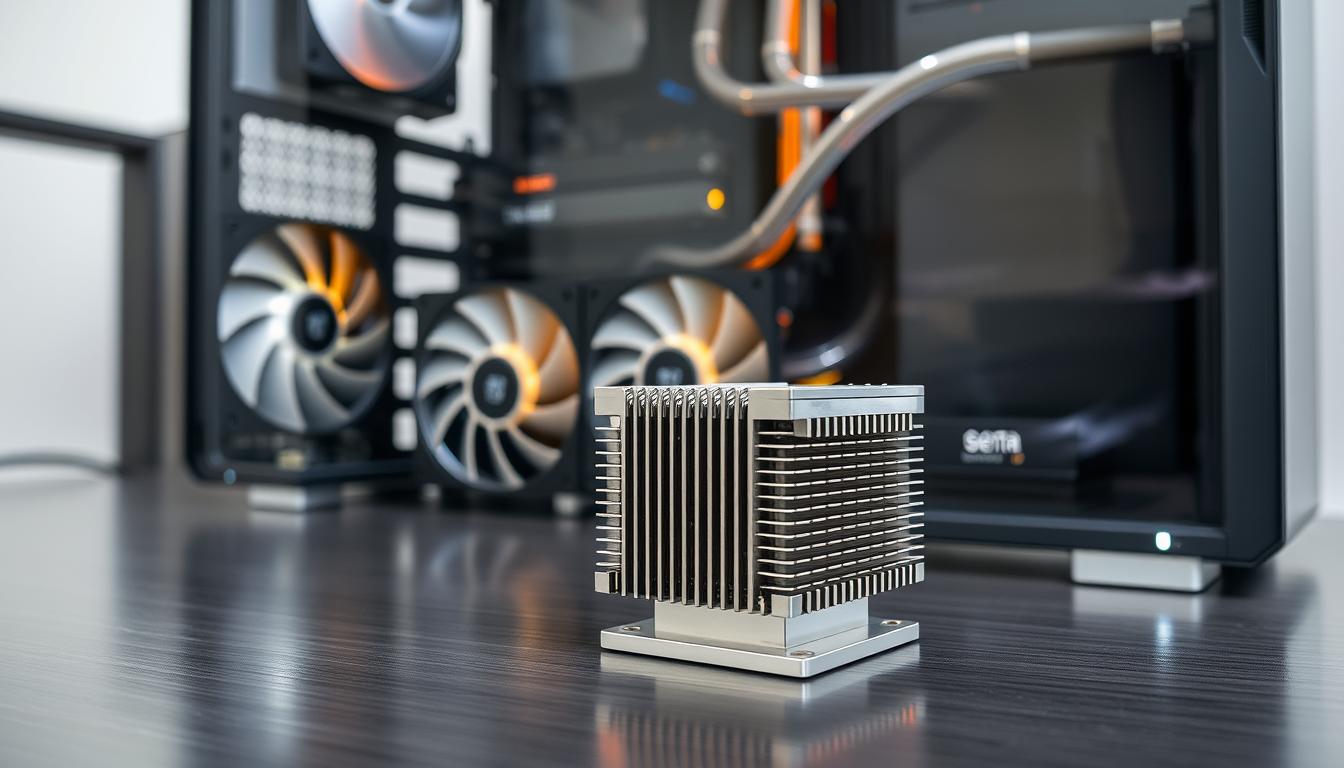
When we talk about cooling things down, we often think of radiators and heat sinks. Both are key in keeping things cool, whether it’s in electronics or big machines. Each has its own strengths and uses.
Knowing how radiators and heat sinks work is important. This article will dive into the details of both. We’ll look at what they do, where they’re used, and why they’re good for certain jobs. This way, we can figure out which one is better for different needs.
Understanding the Basics of Cooling Solutions
When we talk about cooling solutions, we often compare heat sinks and radiators. To figure out which one is better, we need to understand how they work. A heat sink is a passive device that moves heat from a source to a fluid. A radiator, on the other hand, is active and uses a fluid to move heat.
This difference in how they work affects their performance and use. It’s important to know this when deciding between a heat sink and a radiator.
When comparing heat sinks and radiators, there are a few things to think about:
- Thermal conductivity: This is how well a material can move heat.
- Space requirements: How much room you need to install and use the cooling solution.
- Cost: The upfront cost and any ongoing expenses.
By knowing these factors and how heat sinks and radiators work, you can make a smart choice.
Are Radiators or Heat Sinks Better for Different Applications?
Choosing between radiators and heat sinks depends on the application. Heat sinks are often used in electronic devices like computers and phones. They help cool down the processor. Radiators, on the other hand, are used in cars and buildings to control temperature. The choice between a heat sink and a radiator depends on their efficiency, cost, and how easy they are to maintain.
The goal of cooling systems is to move heat away from sources. Radiators work well for big heat needs, like in cars and factories. Heat sinks are better for small heat needs, like in gadgets and computers.
Here are some key uses for radiators and heat sinks:
- Automotive: radiators cool engines
- Industrial: radiators cool big machinery
- Electronic devices: heat sinks cool them down
- Computers: heat sinks keep processors cool
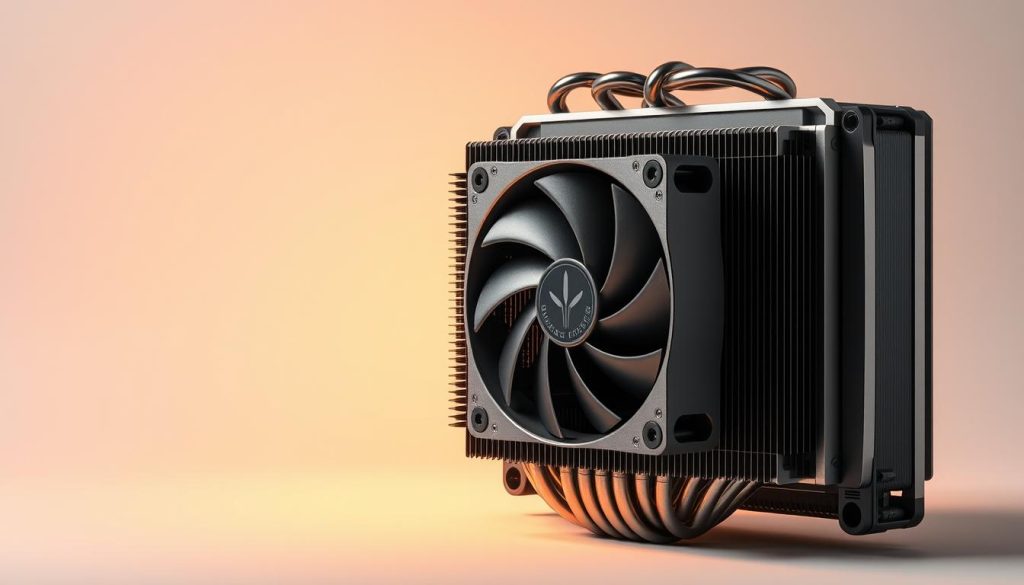
In short, pick radiators or heat sinks based on your heat needs. Knowing their strengths helps you choose the right cooling systems for your project.
Key Performance Factors in Cooling Systems
Cooling systems have several important factors. Radiators and heat sinks are key components. They work together to keep things cool. The ability of materials to conduct heat, known as thermal conductivity, is a big deal. How well a material conducts heat affects its use as a heat sink or radiator.
- Thermal conductivity comparison between radiators and heat sinks
- Space requirements and installation considerations
- Cost considerations and budget constraints
- Maintenance requirements and possible downtime
Looking at these factors helps design a better cooling system. Whether you pick a radiator or a heat sink, knowing these details is key. This ensures your system works well and lasts long.
Common Misconceptions About Cooling Solutions
There are many misconceptions about cooling solutions. Some people think radiators and heat sinks are the same or that one is always better. But, the right choice depends on the specific needs of the application.
Another myth is that radiators are only for high-performance uses, while heat sinks are for low-power devices. But, radiators are used in many situations, from small electronics to big industrial equipment. They are known for their strong cooling power and reliability. Heat sinks, on the other hand, are great for tight spaces, like in laptops or smartphones.
It’s key to remember that cooling solutions vary by application. What works for one might not work for another. For example, a radiator might be perfect for a high-performance computer, but a heat sink could be better for a small device. Knowing the differences helps ensure devices run well and efficiently.
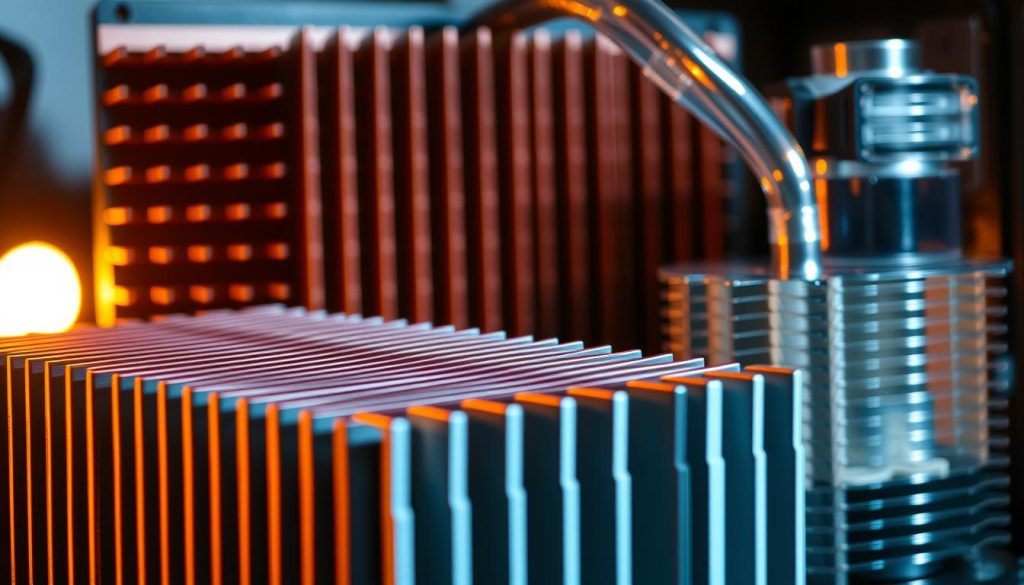
Choosing Between Radiators and Heat Sinks
Choosing the right cooling solution is key for top performance and efficiency. The decision between radiators and heat sinks depends on several factors. These include the application, available space, and budget.
Heat sinks are popular in desktop computers because they are small and efficient. But, radiators are better for cooling industrial equipment because they can handle more heat.
In cars, a mix of radiators and heat sinks is used for the best cooling. The choice between radiators and heat sinks depends on the specific needs of the application. Important factors include space, cooling power, and cost.
- Space constraints: Heat sinks fit well in tight spaces, while radiators need more room.
- Cooling capacity: Radiators can cool more than heat sinks, making them good for high-heat tasks.
- Cost: Heat sinks are cheaper but might need more upkeep.
By weighing these factors, you can pick the best cooling solution for your needs. This ensures your cooling systems work well and efficiently.
Conclusion: Making the Right Choice for Your Cooling Needs
Both radiators and heat sinks are essential cooling solutions, but they serve different purposes and are suited for different applications. Heat sinks are ideal for compact, low-to-moderate heat load scenarios, such as cooling electronic devices. Radiators, on the other hand, are better suited for high-heat applications like car engines and industrial machinery.
By understanding the key differences, performance factors, and common misconceptions, you can make an informed decision and choose the best cooling solution for your needs. Whether you opt for a heat sink or a radiator, proper installation and maintenance are crucial for ensuring optimal performance and longevity.
FAQ
What is the main difference between a radiator and a heat sink?
A radiator uses fluid to actively transfer heat, while a heat sink relies on air to passively dissipate heat.
What are the common applications for radiators and heat sinks?
Radiators are used in cars and factories for cooling engines. Heat sinks are found in gadgets and computers. They help cool down parts like processors and graphics cards.
Are there any common misconceptions about radiators and heat sinks?
Yes, people often think they can swap them out or that one is always better. But, it really depends on what you need for your situation.
How do I choose between a radiator and a heat sink for my cooling needs?
Think about what you’re cooling (like a computer or a car engine) and how much space you have. Also, consider your budget. Talking to experts or looking at industry advice can help pick the right one for you.


