

Calculating heat sink thermal resistance is key in electronics cooling. It ensures components don’t overheat. This is vital for keeping devices safe and working well.
Good thermal management is essential for making electronic devices. Knowing how to calculate heat sink thermal resistance helps engineers. They can then design better cooling systems. This improves how well devices work and how long they last.
Understanding Heat Sink Thermal Resistance Basics
Keeping electronics cool is key in today’s tech world. Heat sink design is essential for this. Thermal resistance shows how well heat moves from the component to the air.
Designing a heat sink well is important. A good design lowers thermal resistance. This means better cooling for electronics, which is vital in high-power uses.
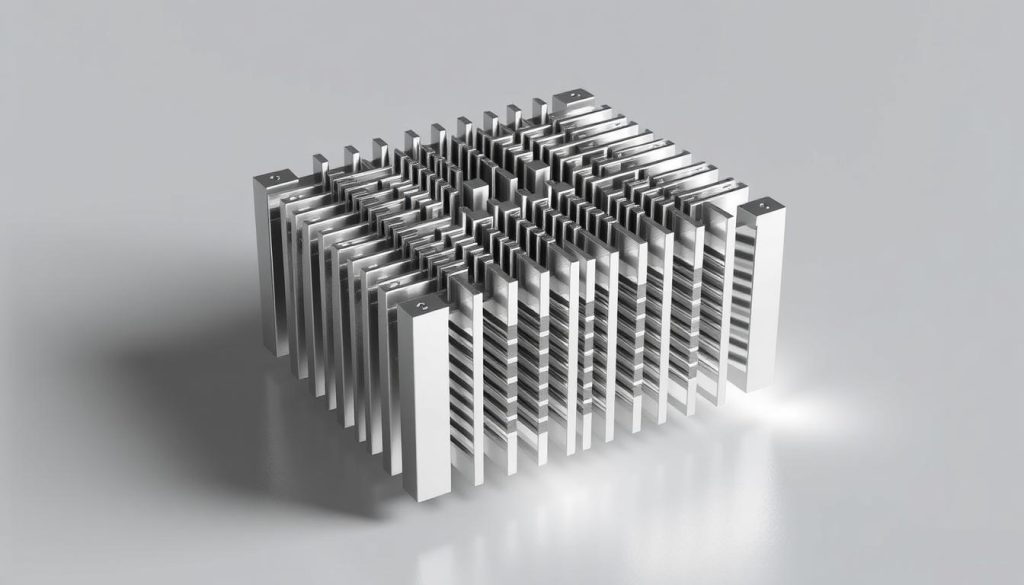
Several things affect thermal resistance in heat sink design. These include the material, surface area, and how the heat sink connects to the component. By focusing on these, engineers can make heat sinks that cool better. This boosts performance, reliability, and cuts down on maintenance costs.
Good thermal management is vital for electronic systems’ reliability and performance. Knowing about heat sink thermal resistance helps designers and engineers make better systems. This knowledge is important for many areas, from gadgets to industrial and car systems.
How to Calculate Heat Sink Thermal Resistance
To figure out heat sink thermal resistance, you need to know the formula and use good thermal management. The calculation depends on the material, size, and shape of the heat sink. It also depends on the ambient temperature and airflow.
The heat sink thermal resistance formula is key in thermal management. It helps find out how well a heat sink works. Engineers use this formula to make sure electronic devices run smoothly.
When you’re calculating heat sink thermal resistance, remember a few things:
- The material of the heat sink and how well it conducts heat
- The size and shape of the heat sink, like the base area and fin height
- The ambient temperature and airflow, which affect thermal resistance a lot
By considering these factors and using the formula, engineers can create good thermal management plans. This helps prevent overheating and keeps electronic devices running well.
Factors Affecting Heat Sink Performance
Several factors impact heat sink performance. These elements are key to the efficiency of thermal management systems. To get the best results, look at the material, surface roughness, and airflow.
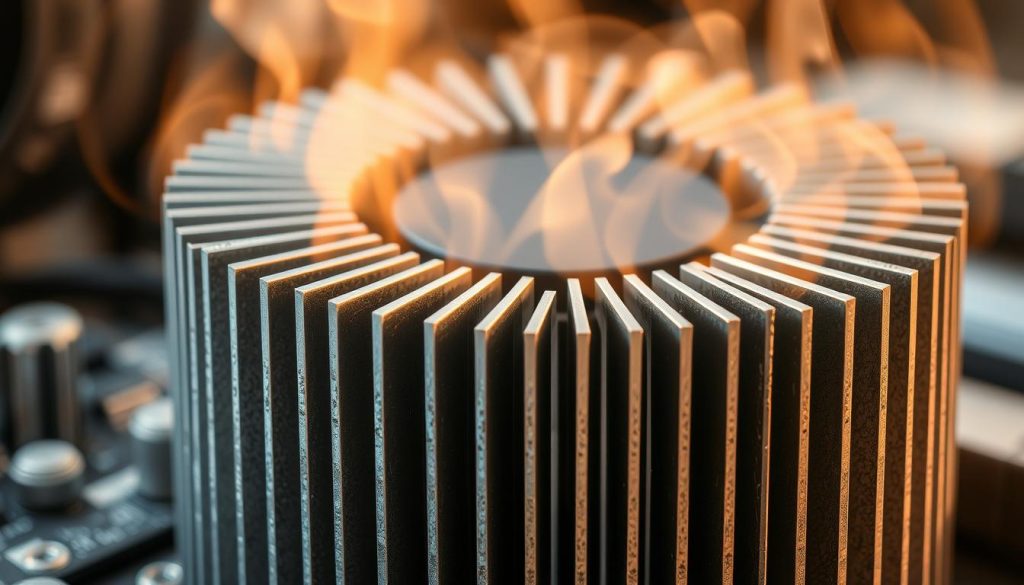
The material used is a big deal. Different materials can handle heat differently. Copper and aluminum are top choices because they conduct heat well.
Surface roughness matters too. A smooth surface helps the heat sink work better. It increases the area in contact with air, improving heat transfer.
- Use materials with high thermal conductivity
- Ensure a smooth surface finish
- Optimize airflow around the heat sink
By focusing on these areas, you can boost heat sink performance. This leads to better system efficiency.
Common Mistakes in Heat Sink Calculations and How to Avoid Them
Small mistakes in heat sink calculations can cause big problems with thermal management. It’s key to know the common heat sink calculation mistakes and how to dodge them. By sticking to thermal management best practices, designers and engineers can avoid errors and make cooling systems work well.
When doing heat sink calculations, it’s important to think about many factors. These include temperature measurement errors, wrong material choices, and missing environmental factors. By carefully looking at these and using good data, designers can make precise calculations and steer clear of common mistakes.
- Inaccurate temperature measurements
- Incorrect material selection
- Failure to account for environmental factors
Knowing these common pitfalls and how to avoid them helps designers make accurate heat sink calculations. This ensures good thermal management best practices. It helps prevent overheating, cuts down the chance of component failure, and boosts system performance.
Conclusion: Optimizing Your Heat Sink Calculations
In this guide, we’ve delved into heat sink thermal resistance optimization and thermal management optimization. You now know the basics of thermal resistance and how heat sinks work. This knowledge helps you design better cooling systems for your electronics.
Calculations are key. Learning the right formulas and considering all factors ensures your heat sink design works well. Watch out for mistakes like wrong temperature readings or bad material choices to improve your system.
With what you’ve learned, you’re ready to improve your heat sink calculations. Follow these tips to make cooling systems that keep temperatures just right. This will help your electronics last longer and make your products more efficient and reliable. Use heat sink thermal resistance optimization to boost your thermal management skills.


