

Heat sink compounds, also known as thermal pastes, are essential for keeping your electronic devices cool and running efficiently. Whether you’re a gamer, a PC enthusiast, or someone who relies on high-performance electronics, choosing the right thermal paste can make a significant difference in your device’s performance and lifespan. In this guide, we’ll explore everything you need to know about heat sink compounds, and you’ll be able to pick the best thermal paste for your needs.
Understanding Heat Sink Compound and Its Purpose
A heat sink compound, or thermal paste, is a thermally conductive material applied between a heat source and a heat sink. Its primary purpose is to improve heat transfer by eliminating air gaps and ensuring maximum contact between the two surfaces.
Each heat sink compound type is made for different uses, with its own strengths. When picking a heat sink compound, consider its thermal conductivity, viscosity, and material compatibility. The right choice ensures efficient heat transfer. It also helps avoid overheating and extends device life.
Key Properties of Quality Heat Sink Compounds
Choosing the right heat sink compound is important. Look for thermal conductivity, viscosity, and stability. A good compound transfers heat well, fills small gaps, and stays effective over time.
- Thermal conductivity: How well it transfers heat.
- Viscosity: Its thickness and how easily it flows.
- Stability: How well it keeps its performance over time.

By looking at these properties, you can find a top-notch heat sink compound. It will meet your needs and offer the best cooling efficiency.
Different Types of Thermal Interface Materials
There are several types of thermal interface materials, each with its own advantages and ideal use cases:
1. Metal-Based Thermal Paste
- Materials: Silver, copper, or aluminum.
- Advantages: High thermal conductivity, excellent for high-performance applications.
- Disadvantages: Expensive and can be electrically conductive (risky for certain components).
2. Silicon-Based Thermal Paste
- Materials: Silicones and siloxanes.
- Advantages: Affordable, easy to apply, and non-conductive.
- Disadvantages: Lower thermal conductivity compared to metal-based pastes.
3. Carbon-Based Thermal Paste
- Materials: Graphene, carbon nanotubes.
- Advantages: High thermal conductivity and flexibility.
- Disadvantages: Can be expensive and harder to find.
4. Liquid Metal Compounds
- Materials: Gallium, indium.
- Advantages: Exceptional thermal conductivity.
- Disadvantages: Conductive and corrosive, requiring careful handling.
Each material has its own advantages and disadvantages. The choice depends on the specific application and needs. Knowing about these materials helps designers and engineers make the right choice for their projects.
What Is the Best Heat Sink Compound for Different Applications
Choosing the best heat sink compound depends on the application. Each use has its own needs.
Applications and Their Requirements
- Gaming PCs: high thermal conductivity, high temperature resistance
- Industrial Electronics: harsh environment resistance, reliable performance
- Consumer Electronics: compact, efficient, cost-effective
By picking the right heat sink compound for your needs, you get better performance and longer life for your devices. Whether it’s for gaming PC cooling, industrial electronics cooling, or consumer electronics thermal management, the right compound is key.
Proper Application Techniques for Optimal Performance
Getting the best cooling efficiency depends on how you apply the thermal paste. A good thermal paste application can greatly improve your heat sink compound’s performance.
- Clean the Surfaces: Use isopropyl alcohol to remove old thermal paste and debris from the heat source and heat sink.
- Apply the Paste: Use a pea-sized amount for CPUs or a thin line for GPUs. Avoid over-applying, as excess paste can reduce cooling efficiency.
- Mount the Heat Sink: Gently press the heat sink onto the heat source to spread the paste evenly.
By following these steps and using the right amount of thermal paste, you can get the best cooling efficiency. This will also help your electronic devices last longer.
Common Mistakes to Avoid When Using Thermal Paste
Using thermal paste can lead to problems if done wrong. Thermal paste mistakes can make your device run hotter. Heat sink compound errors can even damage it. Knowing these mistakes helps you avoid them.
- Using Too Much or Too Little: Excess paste can act as an insulator, while too little won’t fill gaps effectively.
- Improper Storage: Keep thermal paste in a cool, dry place to maintain its consistency and performance.
- Ignoring Compatibility: Ensure the paste is compatible with your device and application (e.g., non-conductive pastes for sensitive electronics).
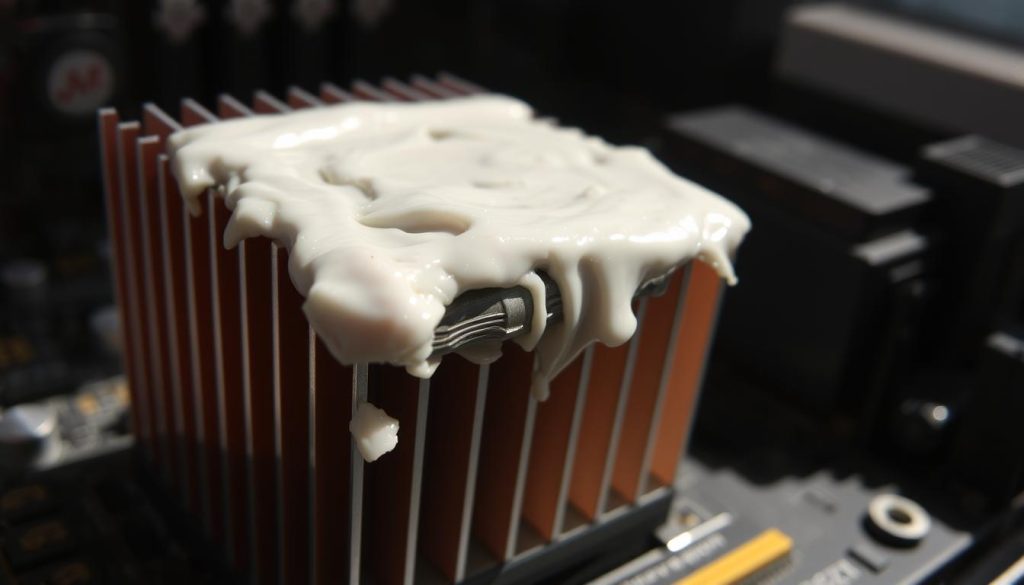
By following these tips, you can keep your device cool and running well. This way, you avoid expensive fixes or new parts because of thermal paste mistakes, heat sink compound errors, and cooling issues.
Conclusion: Making the Right Choice for Your Cooling Needs
Choosing the right heat sink compound is key for your devices’ performance and life. It’s important whether you’re making a gaming PC or updating industrial gear. The correct thermal paste can greatly improve cooling solutions.
Using the right heat sink compound and applying it correctly boosts your devices’ performance. It also lowers temperatures and extends their life. If you’re not sure, ask an expert for advice. The right choice ensures your systems work efficiently and reliably.
FAQ
What is the purpose of a heat sink compound?
A heat sink compound improves heat transfer between a heat source and a heat sink by filling microscopic gaps, ensuring efficient cooling.
What are the different types of thermal interface materials?
Common types include metal-based (silver, copper), silicon-based, carbon-based (graphene, carbon nanotubes), and liquid metal (gallium, indium).
How can I ensure proper application of the heat sink compound?
Clean the surfaces, apply the right amount of paste, and mount the heat sink evenly for optimal performance.
What are some common mistakes to avoid when using thermal paste?
Avoid using too much or too little paste, storing it improperly, or choosing a paste that’s incompatible with your device.


