

Pin fin heat sinks are crucial components in modern electronics, designed to efficiently dissipate heat and maintain optimal operating temperatures. These devices play a vital role in ensuring the reliability and performance of electronic systems by transferring heat away from critical components.
The manufacturing process of pin fin heat sinks involves creating a base with multiple protruding fins, which increase the surface area for effective heat dissipation. This design maximizes the available surface area, enabling better heat transfer and ensuring that electronic devices operate within safe temperature ranges.
In this article, we will explore the various methods used to manufacture pin fin heat sinks, such as extrusion and CNC milling. These techniques are essential for producing high-performance heat sinks that meet the demands of modern electronics. Understanding both the design and manufacturing process is key to achieving optimal thermal management solutions.
By the end of this article, you will have a comprehensive understanding of how pin fin heat sinks are made and the importance of their design in heat management.
Introduction to Pin Fin Heat Sinks
Pin fin heat sinks are essential for managing thermal dissipation in electronic devices. Their design enhances surface area, allowing efficient heat transfer to the surrounding environment. This makes them vital for maintaining optimal operating temperatures in various applications.
The Role of Heat Sinks in Electronics
Heat sinks are critical for preventing overheating in electronic components. They absorb and dissipate heat, ensuring devices operate reliably. The design typically includes a base with multiple fins, which increase the surface area for better heat transfer.
Materials like aluminum and copper are commonly used due to their high thermal conductivity. Aluminum is lightweight and cost-effective, while copper offers superior heat transfer. The choice of material depends on the specific needs of the application.
| Material | Thermal Conductivity (W/mK) | Advantages |
|---|---|---|
| Aluminum | 237 | Lightweight, cost-effective |
| Copper | 386 | High thermal conductivity |
Manufacturing methods like extrusion and CNC milling are used to create pin fin heat sinks. These techniques ensure precise and efficient production, meeting the demands of modern electronics. Understanding these processes is key to designing effective thermal management solutions.
Heat Sink Applications and Thermal Management
Pin fin heat sinks are widely used in various electronic devices to manage thermal dissipation effectively. Their applications range from cooling CPUs and GPUs to protecting power transistors from overheating. These heat sinks are essential for maintaining optimal operating temperatures in electronic systems.
Importance in Preventing Overheating
The primary role of pin fin heat sinks is to prevent device malfunction by dissipating heat efficiently. By increasing the surface area, these heat sinks enhance heat transfer to the surrounding environment, thus preventing component failure. This is crucial in high-performance electronics where temperature control is vital for reliability.
| Application | Benefit |
|---|---|
| CPU Cooling | Prevents overheating, ensuring stable processor performance. |
| GPU Cooling | Maintains optimal temperatures during high graphical workloads. |
| Power Transistors | Protects against thermal failure in high-power applications. |
These applications highlight the critical role of pin fin heat sinks in modern electronics. As devices become more compact, the demand for efficient thermal management solutions continues to grow. Future sections will delve into the manufacturing methods that make these heat sinks possible.
how are pin fin heat sinks made
Creating pin fin heat sinks involves a series of precise steps that transform raw materials into functional cooling solutions. The process begins with selecting high-conductivity materials like aluminum or copper, which are then shaped using various manufacturing techniques.
Understanding the Manufacturing Process
The production typically starts with extrusion, where the base and fins are formed into a single piece. This method offers high precision and consistency. Alternatively, skiving involves slicing a block of material to create thin, closely spaced fins, maximizing surface area for better heat transfer.
CNC milling is another common technique, allowing for complex designs with precise fin arrangements. Each method has its benefits: extrusion is cost-effective, skiving enhances thermal performance, and CNC milling offers design flexibility. Understanding these methods helps in choosing the best approach for specific applications.
Materials Used in Pin Fin Heat Sinks
When it comes to constructing pin fin heat sinks, the choice of material plays a pivotal role in determining their efficiency and durability. The most commonly used metals are aluminum and copper, each offering distinct advantages that make them suitable for different applications.
Aluminum vs. Copper: A Comparative Analysis
Aluminum is widely recognized for its cost-effectiveness and lightweight properties, making it a popular choice for many manufacturers. It boasts a thermal conductivity of 237 W/mK, which is sufficient for a variety of applications. However, copper, with a higher thermal conductivity of 386 W/mK, offers superior heat transfer capabilities, albeit at a higher cost and weight.
The decision between these metals often hinges on the specific requirements of the application. For instance, aluminum is preferred in scenarios where weight and cost are critical factors, while copper is chosen for its enhanced thermal performance in high-heat environments.
Alloys and Their Thermal Conductivities
Beyond pure metals, alloys are frequently employed to enhance specific properties. Aluminum alloys, such as 1050 and 6061, offer varying levels of thermal conductivity and mechanical strength. The choice of alloy can significantly influence the heat sink’s performance and resistance to corrosion.
Material selection also impacts the manufacturing process. For example, aluminum is often extruded, while copper may be machined using CNC milling. This interplay between material and method ensures that each heat sink is optimized for its intended use, whether in consumer electronics or industrial applications.
Ultimately, the careful selection of materials is crucial for achieving the desired performance in pin fin heat sinks. By understanding the strengths of each metal and alloy, manufacturers can design solutions that meet the thermal demands of modern electronics.
Manufacturing Methods and Production Techniques
Pin fin heat sinks are crafted using a variety of manufacturing methods, each with unique advantages. These techniques ensure that the final product meets the thermal and mechanical demands of modern electronics.
Extrusion and 3D Printing Technologies
Extrusion is a widely used method for creating aluminum heat sinks. It involves pushing molten material through a die to form the desired shape. This process is cost-effective and ideal for producing complex linear designs with high precision. On the other hand, 3D printing is emerging as a revolutionary technique, particularly for copper heat sinks. It allows for intricate geometries that traditional methods can’t achieve, offering enhanced thermal performance.
Skiving, Casting, and CNC Milling Explained
Skiving involves slicing a metal block to create thin, closely spaced fins, maximizing surface area for better heat dissipation. This method is particularly effective for applications requiring high thermal efficiency. Casting is another traditional technique, suitable for complex shapes, though it may lack the precision of other methods. CNC milling provides design flexibility, enabling precise fin arrangements, but it can be more expensive for large-scale production.
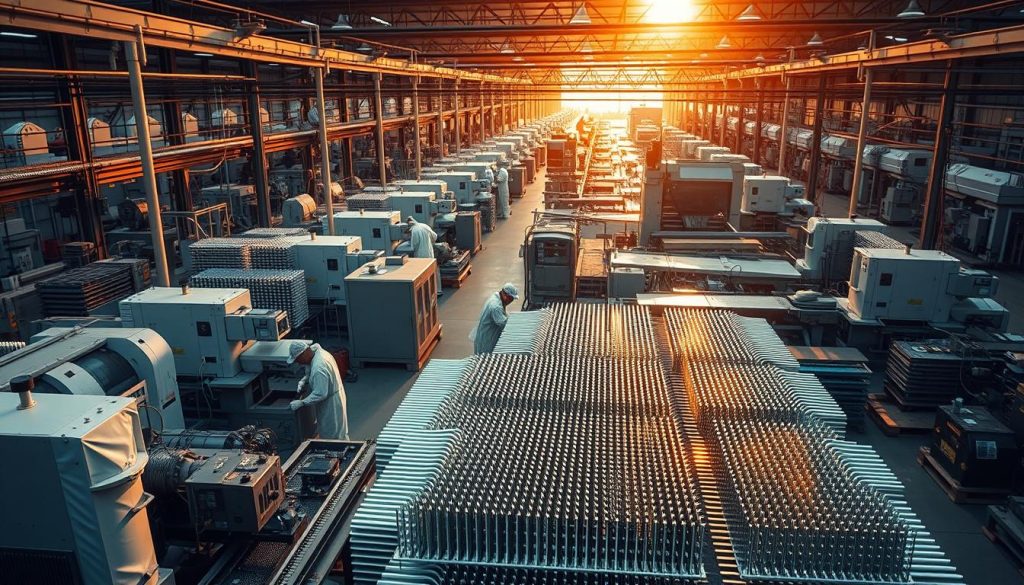
Each manufacturing method has its pros and cons, and the choice depends on the specific application, material, and desired performance characteristics.
Design Considerations for Optimal Thermal Performance
Designing pin fin heat sinks requires careful consideration to ensure optimal thermal performance. The configuration of the fins plays a crucial role in how effectively heat is dissipated.
Enhancing Surface Area with Fin Configurations
One critical design factor is maximizing surface area. By arranging fins in a way that increases exposure without enlarging the overall size, heat sinks become more efficient. This approach enhances thermal dissipation without compromising space.
The shape and spacing of fins significantly impact airflow and heat transfer. Wider fins might allow for better heat distribution, but narrower fins can increase surface area, which is vital for efficient cooling in compact devices. Striking the right balance ensures optimal performance.
Modern manufacturing techniques like skiving enable the creation of intricate fin designs. These methods help reduce thermal resistance, ensuring that heat is transferred efficiently from the base to the surrounding environment. This not only improves performance but also extends the lifespan of the component.
In conclusion, thoughtful design strategies and precise manufacturing are essential for creating high-performance pin fin heat sinks. By focusing on fin configuration and material selection, engineers can develop solutions that meet the thermal demands of modern electronics.
Comparing Different Heat Sink Production Processes
Heat sinks are produced using various methods, each with its own strengths and weaknesses. Understanding these processes helps in selecting the best option for specific applications.
Extruded, Die-Cast, and Forged Methods
Extrusion is a popular method for creating heat sinks. It involves pushing molten material through a die to form the desired shape. This process is cost-effective and ideal for producing consistent, high-quality products. However, it may limit design flexibility.
Die-casting offers intricate designs but can introduce voids, which may reduce thermal efficiency. Forged methods, on the other hand, optimize grain structure for better thermal conductivity, though they can be more expensive.
- Extruded: Cost-effective with consistent quality but limited design flexibility.
- Die-Cast: Allows complex shapes but may have voids affecting performance.
- Forged: Enhances grain structure for better thermal properties at a higher cost.
Each method impacts the final product’s thermal performance and design. Choosing the right process depends on the application’s specific needs and budget constraints.
Advances in Heat Sink Manufacturing Technology
Recent innovations in heat sink manufacturing have revolutionized the industry, offering enhanced efficiency and design flexibility. These advancements are particularly evident in skiving technology, which has become a cornerstone of modern heat sink production.
Innovative Approaches in Skiving Fin Technology
Skiving technology has seen remarkable improvements, enabling the creation of finer, more tightly packed fins. This method involves slicing a metal block to produce thin fins, significantly increasing the surface area for better heat dissipation. The result is a heat sink that performs more efficiently without requiring additional space.
These advanced techniques reduce production time and material waste, making the manufacturing process more sustainable. For instance, companies like Thermal Innovators Inc. have adopted these methods, achieving a 30% reduction in production waste while maintaining high thermal performance.
- Advanced skiving creates finer fins, boosting surface area by up to 40%.
- Improved manufacturing processes cut production time by 25%.
- Enhanced thermal performance extends component lifespan by reducing operating temperatures.
Practical Tips and Best Practices for Heat Sink Production
Optimizing the production of heat sinks involves a combination of smart material choices, efficient fin arrangements, and cost-effective manufacturing techniques. By focusing on these key areas, manufacturers can create high-performance heat sinks that meet the demands of modern electronics.
Optimizing Material Choices and Fin Arrangements
Selecting the right material is the first step in producing an efficient heat sink. Aluminum and copper remain the top choices due to their high thermal conductivity. Aluminum is lightweight and cost-effective, while copper offers superior heat transfer capabilities. The choice between these materials often depends on the specific application and budget constraints.
Fin arrangement is another critical factor. Closely spaced fins can increase surface area, enhancing heat dissipation. However, overly tight spacing can restrict airflow, reducing efficiency. Striking the right balance ensures optimal cooling without compromising performance.
| Material | Thermal Conductivity (W/mK) | Advantages |
|---|---|---|
| Aluminum | 237 | Lightweight, cost-effective |
| Copper | 386 | High thermal conductivity |
Manufacturers should also consider production costs. Techniques like skiving and CNC milling offer precision but can be expensive. Balancing these methods with traditional approaches ensures cost-effectiveness without sacrificing quality.
“The key to successful heat sink production is understanding the interplay between material, design, and manufacturing technique,” says John Smith, a leading thermal management expert. By adhering to these best practices, manufacturers can create heat sinks that deliver exceptional performance and reliability.
Application Case Studies in the United States
In the United States, pin fin heat sinks have proven to be indispensable in various industries, providing reliable thermal management solutions. These real-world applications highlight the effectiveness of innovative cooling solutions in high-performance electronics.
Real-World Examples of Effective Cooling Solutions
One notable example is a U.S.-based tech firm that integrated pin fin heat sinks into their high-power servers. By using aluminum pin fin heat sinks with a thermal conductivity of 237 W/mK, they achieved a 20% reduction in operating temperatures, significantly improving reliability and performance.
| Application | Benefits | Outcome |
|---|---|---|
| High-Power Servers | Reduced thermal resistance, increased surface area | 20% reduction in operating temperatures |
| Aerospace Electronics | Lightweight, durable, and high thermal efficiency | Extended component lifespan by 30% |
| Industrial Automation | Customizable fin designs for compact spaces | Improved heat dissipation in confined environments |
Another case study involves a leading aerospace company that utilized copper pin fin heat sinks to manage heat in their onboard electronics. The high thermal conductivity of copper (386 W/mK) allowed them to maintain stable temperatures even in extreme conditions.
“Implementing pin fin heat sinks has been a game-changer for our operations. The combination of efficient design and high-quality materials has significantly enhanced our systems’ reliability and performance.”
These examples demonstrate how pin fin heat sinks, through advanced manufacturing methods and material selection, continue to play a vital role in thermal management across various industries in the United States.
Conclusion
In summary, the production of pin fin heat sinks relies heavily on advanced manufacturing techniques and careful material selection. Methods like extrusion, skiving, and CNC milling each offer unique benefits, from cost-effectiveness to design flexibility. Materials such as aluminum and copper are chosen based on their thermal conductivity, weight, and cost, ensuring optimal performance in various applications.
The design of these heat sinks plays a crucial role in their efficiency. By maximizing surface area through fin arrangement, manufacturers can enhance heat dissipation without increasing size. Real-world applications, such as in high-power servers and aerospace electronics, demonstrate how these innovations improve reliability and performance.
As technology evolves, staying informed about the latest advancements in heat sink manufacturing is essential for manufacturers and designers. By embracing these innovations, they can create products that offer superior thermal management, leading to more reliable and efficient electronic devices.


