
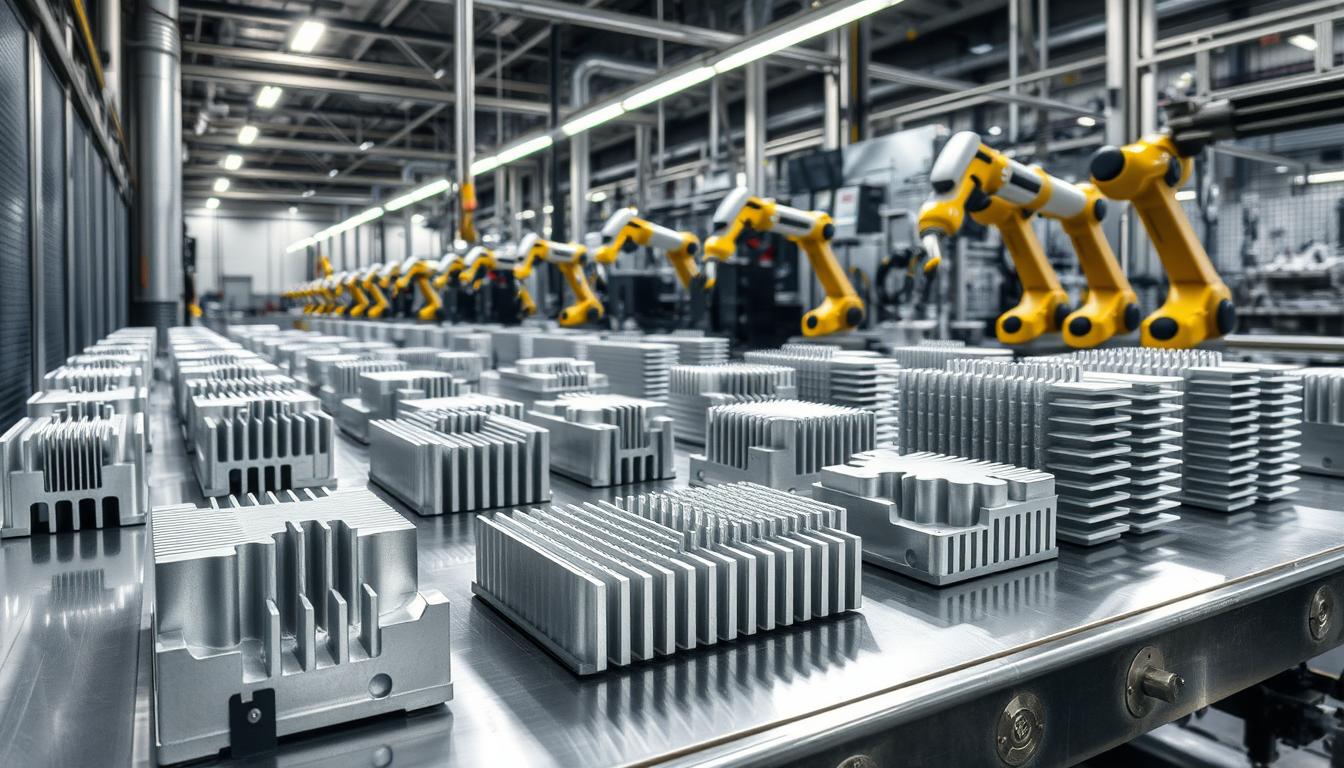
Heat sinks play a crucial role in keeping electronic devices cool by dissipating heat efficiently. These components are essential for maintaining performance and longevity in everything from smartphones to laptops. But have you ever wondered how these vital parts are created?
Aluminum is a top choice for manufacturing heat sinks due to its excellent thermal conductivity and cost-effective production process. The process typically involves melting aluminum and shaping it through methods like die casting or extrusion. These techniques ensure durability and precise design, making aluminum heat sinks both reliable and adaptable for various applications.
While copper is another material known for its conductivity, aluminum offers a better balance of cost, weight, and performance. This makes it the preferred choice for many industries. Understanding the manufacturing steps can provide insights into why aluminum remains a top pick for heat management solutions.
In this guide, we’ll delve into the step-by-step process of creating aluminum heat sinks, exploring techniques like die casting and extrusion. By understanding these methods, you’ll gain a deeper appreciation for the engineering behind these essential components.
Introduction to Aluminum Heat Sinks
Aluminum heat sinks are essential components in modern electronics, designed to prevent overheating in devices and appliances. Their role is crucial for maintaining performance and extending the lifespan of electronic devices. But what makes aluminum an ideal choice for this purpose?
Benefits and Applications of Aluminum
Aluminum offers several advantages that make it a top choice for heat sinks. It is lightweight, yet durable, and provides excellent thermal conductivity. These properties allow it to efficiently dissipate heat, ensuring optimal device performance.
- Lightweight and durable, making it ideal for portable electronics.
- Cost-effective and abundant, reducing production expenses.
- High thermal conductivity for efficient heat dissipation.
Aluminum heat sinks are widely used in various applications, from computers and smartphones to industrial machinery. Their versatility and effectiveness make them a preferred solution for thermal management across different industries.
Key Material Characteristics and Uses
Aluminum’s intrinsic properties contribute to its effectiveness in heat management. It conducts electricity well and provides excellent grounding benefits, enhancing safety in electronic devices. Additionally, its ability to dissipate heat efficiently ensures reliable performance.
The role of air flow in heat sink performance cannot be overstated. Aluminum’s design allows for optimal airflow, which is crucial for effective cooling. This design aspect ensures that heat is dissipated efficiently, maintaining device performance and longevity.
How Are Aluminum Heat Sinks Made: A Step-by-Step Guide
Creating aluminum heat sinks involves a precise, multi-step process that ensures both efficiency and durability. From raw material preparation to final product testing, each stage is crucial for optimal performance.
Melting, Injection, and Mold Processes
The journey begins with melting pure aluminum to create a workable solution. This molten aluminum is then injected into molds under high pressure, shaping it into the desired form. The molds are designed to achieve complex geometries, crucial for effective heat dissipation.
Rapid cooling techniques are employed to harden the aluminum quickly, ensuring structural integrity. This method, known as die casting, is both fast and cost-effective, making it ideal for bulk production.
Cooling, Finishing, and Quality Control
After cooling, the heat sinks undergo finishing processes to enhance their thermal properties. This includes surface treatments that improve conductivity and durability. Quality control checks are integrated throughout the process to ensure each product meets high standards.
Designing fins is a critical step, as they maximize the heat transfer area. A balance between thermal conductivity and resistance is maintained to ensure the heat sinks perform well across various temperatures.
Manufacturing Techniques: Die Casting, Extrusion, and Beyond
Modern heat sink production employs various methods, each with unique benefits. Die casting and extrusion are the most common, but other techniques also offer distinct advantages.
Die Casting Process and Its Advantages
Die casting is a popular method due to its precision and cost efficiency. It involves injecting molten material into a mold under high pressure, creating complex shapes with tight tolerances. This process is ideal for high-volume production and offers excellent thermal conductivity, making it suitable for applications where efficient heat transfer is crucial.
One of the key benefits of die casting is its scalability. Manufacturers can produce large quantities while maintaining consistent quality, which helps reduce costs. The process also supports intricate designs, allowing for customized solutions tailored to specific needs.
Exploring Extrusion and Alternative Methods
Extrusion offers more flexibility in design, especially for complex geometries. This method involves pushing molten material through a die to create the desired shape. While it may not offer the same level of precision as die casting, extrusion is well-suited for applications requiring intricate designs and flexibility.
Beyond die casting and extrusion, other techniques like stamping and machining are used. Stamping is great for simple designs, while machining allows for precise customizations. Each method is chosen based on the application’s requirements, balancing factors like cost, complexity, and performance.
Material selection plays a crucial role in heat sink performance. While aluminum is widely used for its conductivity and cost-effectiveness, other materials like copper are considered for specialized applications. The choice of material directly impacts the component’s efficiency and durability.
- Die casting: High precision, cost-effective, scalable.
- Extrusion: Flexible designs, complex geometries.
- Surface finish: Enhances conductivity and durability.
- Design elements: Fins and pins improve heat transfer.
Design Insights: Thermal Conductivity, Material Selection, and Performance
When designing heat sinks, thermal conductivity and material selection are crucial for optimal performance. These elements ensure efficient heat dissipation, which is vital for maintaining electronic device reliability.
Optimizing Heat Transfer and Airflow
A key factor in heat sink design is maximizing surface area to enhance heat transfer. This is achieved through fin configurations that increase the area exposed to air, allowing more efficient cooling. Proper airflow management is also essential, as it ensures that heat is effectively transferred from the fins to the surrounding environment.
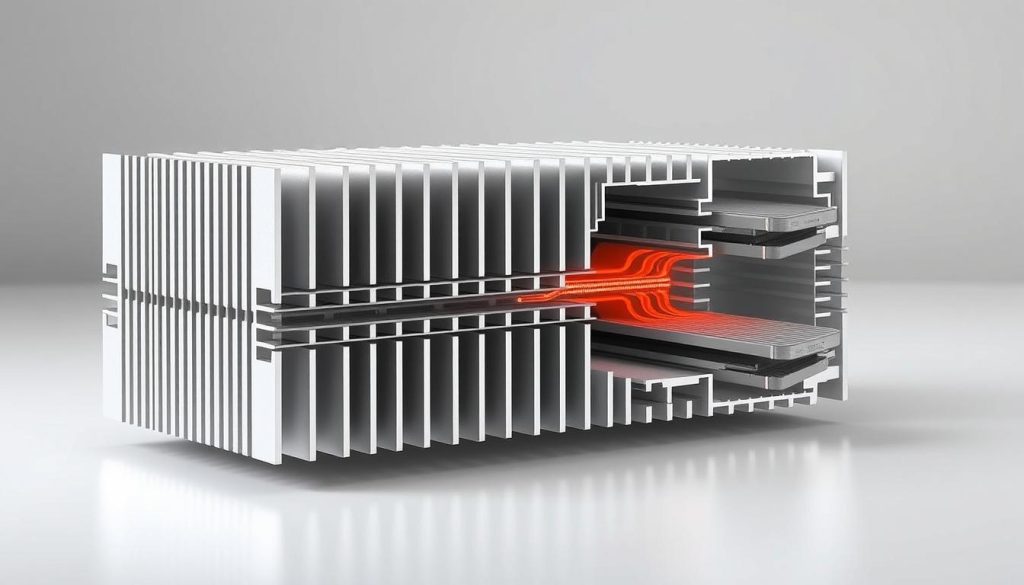
Surface area plays a significant role in heat transfer efficiency. A larger surface area allows for better dissipation of heat, making the heat sink more effective. Additionally, the arrangement of fins can greatly impact airflow, ensuring that heat is transferred efficiently without creating hotspots.
Balancing Cost Efficiency with High Performance
While high-performance materials like copper offer excellent thermal conductivity, they can be costly. Aluminum, on the other hand, provides a cost-effective solution without compromising performance. This balance is critical in producing heat sinks that are both efficient and affordable.
Extruded heat sinks are a popular choice due to their cost-effectiveness and performance. They are widely used in various applications, from consumer electronics to industrial equipment, where both reliability and cost are important considerations.
| Material Type | Thermal Conductivity | Cost Efficiency | Common Applications |
|---|---|---|---|
| Extruded Aluminum | High | Medium | Consumer Electronics, Industrial Machinery |
| Copper | Very High | Low | High-Performance Computing, Aerospace |
| Plastic | Low | High | Low-Heat Applications, Enclosures |
The choice of material directly influences the final result of the heat sink design. Each type of manufacturing method, whether extrusion, die-casting, or machining, brings its own set of benefits and trade-offs. Understanding these factors helps in creating heat sinks that are both effective and economical.
Conclusion
In conclusion, efficient cooling systems are vital for modern electronics, and extruded heat sinks play a key role in maintaining device performance. By understanding the manufacturing steps and material selection, we can appreciate the engineering that goes into creating these essential components.
The process involves techniques like die casting and extrusion, each offering unique benefits in design, cost, and efficiency. Proper material selection and design optimization are crucial for achieving excellent heat dissipation, ensuring reliable performance and longer product lifespans.
Well-designed heat sinks not only enhance reliability but also contribute to safer electronic operation. Adopting innovative manufacturing methods helps stay competitive in the electronics market, meeting the increasing demand for better thermal management solutions.
Both active and passive cooling mechanisms are essential in modern heat sink applications, working together to ensure optimal performance. As technology advances, manufacturing techniques continue to evolve, providing more efficient and cost-effective solutions for heat management.
In summary, the right combination of design, material, and manufacturing method ensures that heat sinks meet the needs of various applications, from consumer electronics to industrial machinery. This balance is key to creating products that are both efficient and economical.


