

Heat sinks are key in keeping electronics cool and working right. Knowing how to calculate the size of a heat sink is important. This article will help you understand how to do it.
Getting the heat sink size right is important to avoid overheating and damage. We’ll talk about the basics of heat sinks and what affects their performance. You’ll also get tips on installing them, focusing on calculation and thermal management.
Understanding Heat Sink Basics and Their Importance
Heat sinks are key in electronics cooling, stopping overheating and keeping devices running well. A good heat sink design is vital for a product’s reliability and life span. Knowing about heat sinks is important to see their role.
Heat sinks work by moving heat from a source to the air around it. This is key in electronics cooling to avoid device failure. Learning about heat sinks helps in choosing or designing the right heat sink design.
Heat sinks have important features like material, shape, and size. Materials like aluminum or copper affect how well they cool. The shape and size also matter for cooling efficiency. Designers use these to make a heat sink design that fits the device’s needs.
Knowing about heat sinks is essential for electronic devices to work right. By understanding electronics cooling and heat sink design, we can start making new solutions for today’s tech.
Key Factors Affecting Heat Sink Performance
Several factors influence how well a heat sink works. Thermal resistance is key because it shows how well the heat sink can cool down. The lower the thermal resistance, the better it performs. The size of the heat sink’s surface area also matters, as a bigger area means better heat transfer.
The material used in the heat sink is also important. Materials like copper are better at transferring heat than others, like aluminum. The design of the heat sink, including its shape and size, also affects its performance.
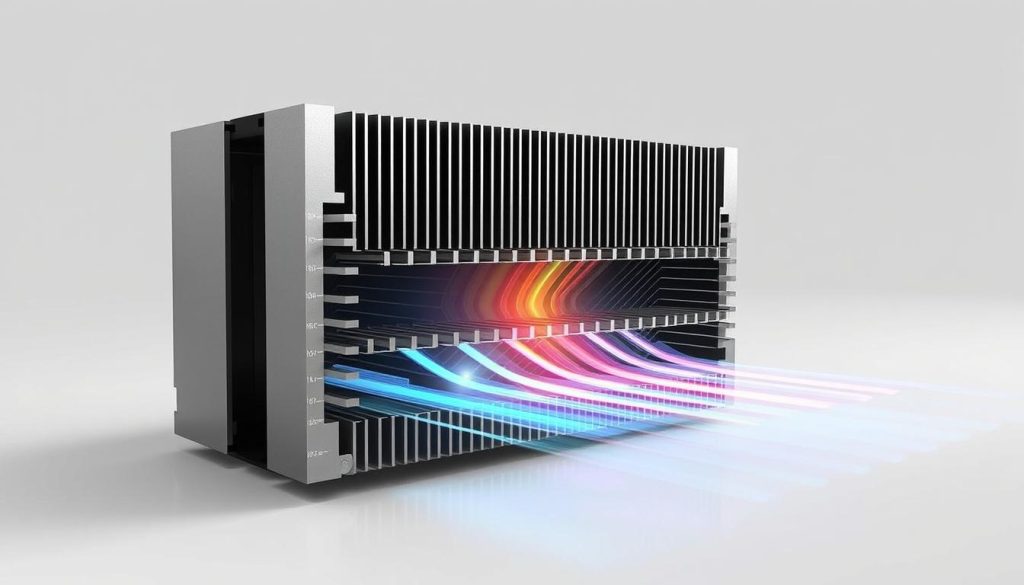
The type of thermal interface material used is another factor. A good thermal interface material can lower thermal resistance and improve heat transfer. By focusing on these factors, designers can make heat sinks that work better. This ensures devices and systems run smoothly and reliably.
Understanding thermal resistance and other factors helps manufacturers create better heat sinks. This leads to improved heat sink performance and system reliability.
Some of the key factors affecting heat sink performance include:
- Thermal resistance
- Surface area
- Material properties
- Design of the heat sink
- Type of thermal interface material
How to Calculate Heat Sink Size for Your Application
To find the right heat sink size for your electronics, look at several key factors. These include thermal resistance, surface area needs, and power dissipation. Getting the size right is key to moving heat away efficiently and avoiding overheating.
Thermal Resistance Calculations
Thermal resistance is a big deal when figuring out heat sink size. You must calculate the thermal resistance of the heat sink. This ensures it can manage the power your application needs.
Surface Area Requirements
The surface area of the heat sink is also important for heat transfer. A bigger surface area helps with heat dissipation. But, it might make the heat sink larger and more expensive.
Power Dissipation Considerations
Power dissipation is another key factor in heat sink size calculation. The heat sink must be able to handle the power your application needs. This prevents overheating and ensures it works reliably.
By looking at these factors and doing the right calculations, you can find the best heat sink size for your needs. This ensures efficient heat transfer and reliable operation.
Common Heat Sink Materials and Their Properties
Choosing the right material for a heat sink is key. Each material has its own thermal conductivity level. This affects how well it can spread out heat. We’ll look at the most common materials, their properties, and where they’re used.
Materials are picked for their thermal conductivity, density, and cost. Aluminum, copper, and composite materials are the most used. Each has its own strengths and weaknesses, fitting different needs.
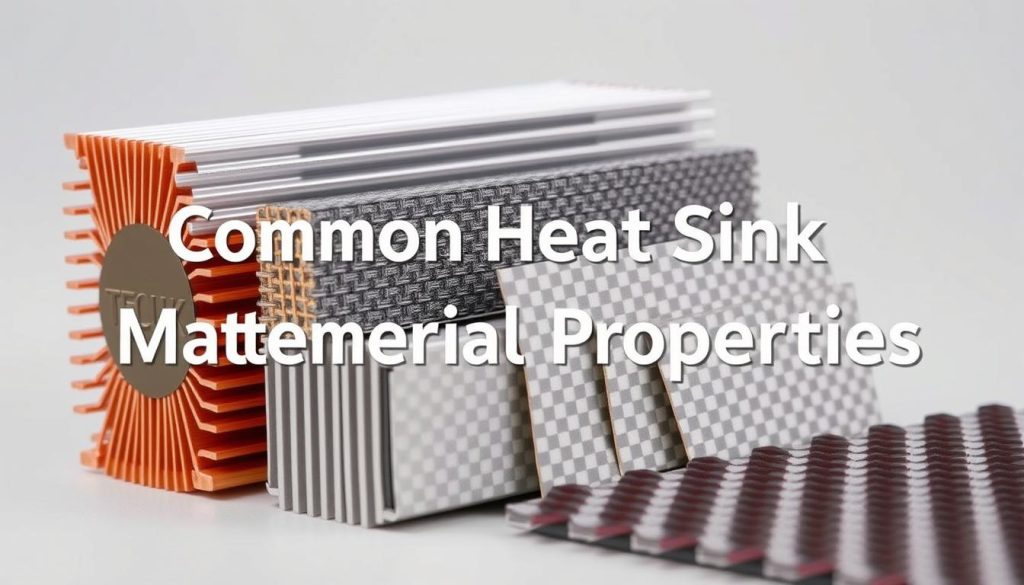
When picking a heat sink material, thermal conductivity is important. It shows how well a material can carry heat. Copper, with its high conductivity, is best for high-power uses. Aluminum, with lower conductivity, is better for lower power needs.
- Aluminum: a cost-effective and lightweight material with moderate thermal conductivity
- Copper: a high-performance material with excellent thermal conductivity, often used in high-power applications
- Composite materials: a combination of materials, providing a balance between thermal conductivity, density, and cost
Knowing about different heat sink materials helps designers choose the best one. This ensures the heat sink works well and reliably.
Practical Tips for Heat Sink Installation
Proper technique is key for heat sink installation. It ensures your electronics work well and last longer. A good heat sink makes your devices more efficient and durable.
Start by cleaning the surface and applying thermal interface material. This fills gaps and boosts heat transfer. Then, pick the right way to mount your heat sink, based on its size and weight.
Here are some important tips for installing heat sinks:
- Use the correct thermal interface material for your application
- Ensure proper surface preparation to prevent damage and ensure good heat transfer
- Choose the correct mounting technique to secure the heat sink in place
In electronics assembly, installing heat sinks is vital. It affects how well your product works and lasts. By following these tips, you can make sure your heat sink works perfectly.
Conclusion: Ensuring Optimal Heat Sink Performance
In this article, we’ve looked at how heat sinks keep electronic devices running well. We’ve covered the basics of heat sink design and what makes them work well. Now, you can pick the best heat sink for your needs.
It’s key to optimize heat sinks and use good thermal management systems. This stops overheating and keeps your electronics working right. Follow the tips in this guide to make sure your heat sinks work well.
Bad heat sink design or installation can cause big problems. It can shorten component life, make systems less reliable, and even cause failures. Always watch your thermal management system and update it when needed.
Focus on improving heat sink performance to stay ahead in your field. Use new technologies and materials to keep your electronics running smoothly. With the right heat sink solutions, your electronics will perform at their best.


