

Pin heat sinks are essential components in modern electronics, playing a crucial role in thermal management. These devices are designed to efficiently dissipate heat, ensuring that electronic components operate within safe temperature ranges. Whether in industrial devices or consumer electronics, heat sinks are vital for maintaining performance and longevity.
Understanding how pin heat sinks are made involves exploring their manufacturing processes and the materials used. This article delves into the production methods, highlighting techniques like forging and skiving, which enhance thermal conductivity. These advancements contribute to the development of more efficient cooling solutions.
The economic and performance benefits of different production methods are significant. By choosing the right approach, manufacturers can optimize both cost and efficiency. This balance is key to meeting the demands of today’s fast-evolving technology landscape.
Let’s explore how these components are made and their applications in modern electronics. The journey from raw materials to finished product is fascinating, offering insights into the engineering behind thermal management.
Introduction to Pin Heat Sinks and Their Importance
Thermal management is a cornerstone of modern electronics, ensuring devices run smoothly without overheating. Pin heat sinks are designed to dissipate heat efficiently, protecting sensitive components like CPUs and GPUs from damage. By understanding how these components work, we can better appreciate their role in maintaining performance and reliability.
Understanding Thermal Management
Thermal management involves controlling temperature in electronic devices. Heat sinks play a key role by transferring heat away from components. This process relies on convection, where heat is carried away by moving air. The design of heat sinks, including features like fins, enhances this natural cooling process.
The Role of Heat Sinks in Electronic Devices
Heat sinks are crucial for managing temperature in electronic systems. They prevent overheating, which can degrade performance and reduce lifespan. Environmental factors like airflow and ambient temperature significantly influence their effectiveness. Optimizing these factors is essential for designing reliable cooling solutions.
| Factor | Influence on Cooling | Optimization Tips |
|---|---|---|
| Air Flow | Higher airflow increases cooling efficiency | Use fans or improve ventilation |
| Ambient Temperature | Higher ambient temperature reduces cooling capacity | Maintain lower ambient temperatures |
| Fin Design | Increases surface area for better heat dissipation | Use pin or fin heat sink designs |
What Are Pin Heat Sinks?
Pin heat sinks are crucial for managing thermal energy in electronic devices. Their design features arrays of pins that significantly boost surface area, enhancing heat transfer. These components are typically made from materials like aluminum and copper, each offering distinct benefits in terms of cost and performance.
Design Features and Basics
The structure of pin heat sinks revolves around their pins, which increase the surface area available for dissipating heat. This design improves cooling efficiency by allowing more heat to be transferred to the surrounding air. The arrangement of these pins plays a key role in determining the overall thermal performance of the heat sink.
Materials and Construction Overview
Aluminum is widely used due to its cost-effectiveness and decent thermal conductivity. Copper, on the other hand, offers superior conductivity but is more expensive. The choice of material depends on the desired balance between performance and cost. The manufacturing process typically involves shaping the material into the desired form, with methods varying based on the material used. These processes will be discussed in more detail later in the article.
how are pin heat sinks made: In-Depth Process Overview
Pin heat sinks are crafted through precise manufacturing processes to ensure optimal thermal management. These components are vital for dissipating heat in electronic devices, making their production both intricate and essential.
Step-by-Step Manufacturing Process
The creation of pin heat sinks involves several key steps:
- Billet Preparation: The process begins with preparing the raw material, typically copper or aluminum, into a workable form.
- Forming Processes:
- Forging shapes the metal under high pressure, enhancing its grain structure for better thermal conductivity.
- Extrusion forces the metal through a die to create complex shapes, ideal for pin configurations.
- Die-Casting molds the metal into precise forms, offering excellent thermal performance.
- Finishing Treatments: The final steps include machining and coating to optimize the heat sink’s surface area and durability.
| Manufacturing Method | Thermal Resistance | Design Flexibility |
|---|---|---|
| Forging | Low | High |
| Extrusion | Moderate | Very High |
| Die-Casting | High | Low |
Each method offers unique advantages. Forging improves grain structure, reducing thermal resistance. Extrusion allows for intricate pin designs, maximizing surface area. Die-casting provides cost efficiency but may compromise on flexibility. Understanding these methods helps in selecting the optimal pin heat sink for specific applications.
Manufacturing Methods and Material Insights
Understanding the production techniques and material choices is crucial for optimizing thermal performance in pin heat sinks. Different manufacturing methods bring unique advantages in terms of thermal conductivity and design flexibility.
Extrusion, Die Casting, and Forging Techniques
Extrusion offers high design flexibility, allowing intricate pin designs that maximize surface area for efficient heat transfer. Die casting provides cost efficiency but limits design adaptability. Forging enhances thermal conductivity by improving the material’s grain structure, making it ideal for high-performance applications.
Advantages of Material Choices: Aluminum vs. Copper
Aluminum is cost-effective with decent thermal conductivity, making it suitable for standard applications. Copper, while more expensive, offers superior conductivity, ideal for demanding thermal environments. Each material presents unique manufacturing challenges, but their performance benefits make them invaluable in heat sink design.
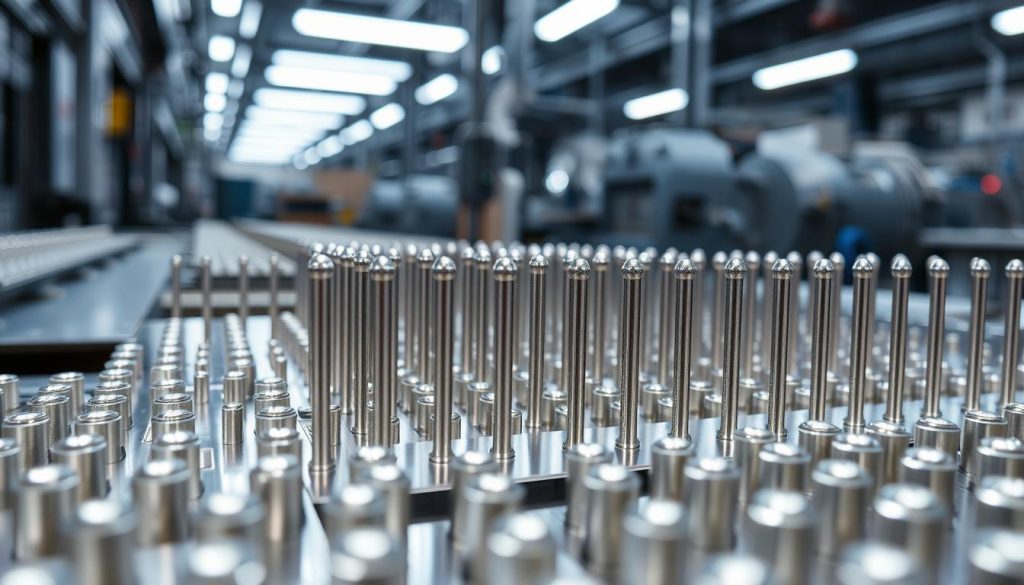
Enhancing Thermal Performance with Pin and Fin Designs
When it comes to thermal management, the design of heat sinks plays a pivotal role. By carefully crafting pin and fin designs, engineers can significantly enhance cooling performance. These designs work by increasing the surface area available for heat dissipation, which in turn improves the overall efficiency of the component.
Optimizing Surface Area for Better Cooling
The primary goal of pin and fin designs is to maximize surface area. A larger surface area allows more heat to be transferred to the surrounding air, thereby cooling the device more effectively. This is particularly important in compact electronic devices where space is limited, and efficient cooling is crucial for maintaining performance and longevity.
| Design Feature | Impact on Cooling | Optimization Strategy |
|---|---|---|
| Pin Configuration | Increases surface area for heat transfer | Use densely packed pins with optimal spacing |
| Fin Design | Enhances airflow and heat dissipation | Incorporate fins with aerodynamic shapes |
| Base Thickness | Affects heat spread and transfer | Ensure adequate thickness for even heat distribution |
Modifications in the base design and pin arrangement can further improve airflow and thermal transfer. For instance, a thicker base can ensure more even heat distribution, while strategically spaced pins can enhance airflow. This combination leads to reduced thermal resistance, making the component more efficient in managing heat.
In various electronic components, tailored designs are implemented to prevent overheating. For example, in high-performance CPUs, optimized pin configurations have shown measurable improvements in cooling efficiency. These designs not only prevent thermal throttling but also extend the lifespan of the component, ensuring reliable operation over time.
Applications in Electronics and Industrial Sectors
Pin heat sinks are widely used across various industries due to their efficient thermal management capabilities. Their design, which incorporates a large surface area, makes them ideal for applications where space is limited but cooling efficiency is crucial.
Consumer Electronics, LED Lighting, and Automotive Systems
In consumer electronics like laptops, PCs, and smartphones, pin heat sinks prevent overheating, ensuring reliable performance. LED lighting also benefits from these heat sinks, as they maintain optimal temperatures for LEDs, prolonging their lifespan. In automotive systems, they are used to cool components such as ECUs and sensors, ensuring operational stability.
Power Electronics and Renewable Energy Systems
- Power electronics rely on pin heat sinks to manage high temperatures, enhancing reliability and efficiency.
- In renewable energy systems, such as solar inverters, they ensure consistent performance by maintaining safe temperatures.
- Industrial machinery benefits from pin heat sinks to cool motors and control systems, reducing downtime and increasing productivity.
Advancements in manufacturing have enabled the creation of pin heat sinks tailored to specific applications, improving thermal management across diverse sectors. This versatility ensures that pin heat sinks remain a critical component in modern electronics and industrial systems.
Design Considerations for Optimal Cooling and Airflow
Designing effective cooling systems involves careful consideration of several key factors. These include fin geometry, spacing, and airflow dynamics, all of which play a crucial role in heat dissipation efficiency. By optimizing these elements, engineers can create systems that not only cool effectively but also maintain optimal airflow.
Fin Geometry and Airflow Dynamics
Fin geometry is critical in determining the efficiency of a cooling system. The shape and size of the fins directly impact how air flows through the system. Wider fins, for example, can create more surface area for heat dissipation, but they may also impede airflow, leading to increased pressure drop. This balance between surface area and airflow is essential for maintaining efficient cooling.
Spacing between fins is another important factor. If the fins are too close together, they can block airflow, reducing the system’s ability to dissipate heat effectively. Conversely, fins that are too far apart may not provide enough surface area for efficient cooling. The ideal spacing depends on the specific application and the airflow dynamics within the system.
Contact and Pressure Management
Contact between the base of the cooling system and the components it is cooling is vital for efficient heat transfer. A secure, even contact ensures that heat is dissipated quickly and effectively. This contact can be enhanced through the use of thermal interface materials, which fill microscopic gaps and improve the transfer of heat.
Pressure management is also crucial in cooling systems. Higher pressure can lead to increased airflow, which enhances cooling performance. However, excessive pressure can also lead to system inefficiencies and potential damage to components. Finding the right balance of pressure and flow is key to maintaining optimal cooling without overloading the system.
| Design Element | Impact on Cooling | Optimization Strategy |
|---|---|---|
| Fin Geometry | Affects airflow and heat dissipation | Use aerodynamic shapes and optimal spacing |
| Fin Spacing | Influences airflow and pressure drop | Maintain balanced spacing for efficient airflow |
| Contact Quality | Maximizes heat transfer efficiency | Ensure even contact with thermal interface materials |
| Pressure Control | Impacts airflow and system efficiency | Regulate pressure to avoid system overload |
By carefully considering these design elements, engineers can create cooling systems that are both efficient and reliable. Innovations in fin design, such as the use of aerodynamic shapes and optimized spacing, have significantly enhanced cooling performance in modern devices. These advancements ensure that components remain within safe operating temperatures, maintaining performance and longevity.
Cost, Efficiency, and Innovation in Heat Sink Production
Modern heat sink manufacturing has evolved significantly, focusing on balancing cost, efficiency, and innovation. This section explores how advancements in production techniques and materials have transformed the industry, offering both economic benefits and improved performance.
Economic Benefits and Process Simplification
Manufacturers have achieved notable cost reductions through innovative techniques like forging. These methods not only simplify production but also reduce the need for secondary operations, enhancing overall efficiency. By streamlining processes, companies can lower production costs without compromising on quality, making heat sinks more accessible for a wider range of applications.
Emerging Technologies and Design Innovations
Emerging technologies such as skiving and 3D printing are revolutionizing heat sink design. Skiving allows for the creation of complex pin arrays, increasing the surface area for better heat dissipation. Additionally, the integration of heat pipes has become a supplementary cooling solution, offering enhanced thermal management in demanding environments.
Comparing different manufacturing methods reveals varying cost-effectiveness. For instance, while forging offers high thermal conductivity, it may involve higher initial investments. In contrast, extrusion provides design flexibility at a lower cost. Understanding the production ratio and performance needs helps manufacturers choose the most suitable method for their applications.
Conclusion
In conclusion, the evolution of pin heat sinks underscores the critical role of innovation in thermal management. Advances in manufacturing techniques like forging and skiving have significantly enhanced thermal conductivity, offering efficient cooling solutions. Material selection between aluminum and copper balances cost and performance, catering to diverse applications.
Design elements such as shape and size play a pivotal role in optimizing heat dissipation. By maximizing surface area through intricate pin configurations, these heat sinks efficiently manage thermal energy, ensuring reliable operation in compact devices. This design optimization is crucial for maintaining performance and longevity in electronics.
The economic benefits of these innovations are substantial. Streamlined production methods reduce costs without compromising quality, making pin heat sinks accessible for various industries. Their versatility spans consumer electronics, automotive systems, and renewable energy, highlighting their broad applicability and economic advantages.
As technology advances, the demand for efficient cooling solutions grows. Continuous innovation in pin heat sink design and manufacturing is essential to meet these demands. By focusing on material selection, design optimization, and cost-effective production, the industry ensures that pin heat sinks remain a cornerstone of modern thermal management.


